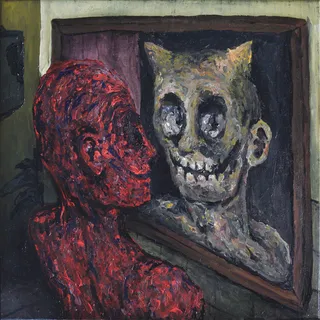
“A Spyglass to One’s Face” finds YUNGMORPHEUS refining the calm, hazy aesthetic he’s spent years shaping, while letting more of his inner tension slip through the cracks. The Miami-raised, Los Angeles–based rapper has long mastered the art of understatement, and this collaboration with Dirty Art Club feels like a clearer, more focused version of that vision rather than a departure from it.
The track moves at Morph’s usual unhurried pace. His voice doesn’t sit on top of the beat so much as sink into it, becoming another texture within the arrangement. The drums barely knock, the loops glide instead of churn, and the overall mood feels mildly psychedelic—lucid, slow, and deliberate. It’s the kind of song that doesn’t demand attention but rewards it, gradually pulling the listener into its orbit.
Dirty Art Club’s production sharpens the atmosphere without breaking its spell. Compared to the dustier, more saturated sound Morph often favors, the beat here feels cleaner and more spacious. Individual elements stand out with intention, giving the track a sense of clarity that mirrors the song’s introspective tone. There’s an almost live feel to the way the samples move, as if the music is being shaped in real time.
Lyrically, Morph sounds more unsettled than usual. He shifts perspectives, observing himself from a distance, as though self-analysis is easier when filtered through a character. Beneath the relaxed imagery—luxury habits, routine comforts—there’s a quiet anxiety about time, identity, and survival. These thoughts aren’t overstated; they surface in brief, striking lines that linger after the verse ends.
“A Spyglass to One’s Face” doesn’t radically alter YUNGMORPHEUS’ approach, but it deepens it. By allowing more space in the production and more vulnerability in the writing, the song reveals a sharper emotional edge beneath the chill. It’s a subtle evolution, one that makes Morph feel more present, more human, and more willing to sit with the discomfort he’s spent years floating around.