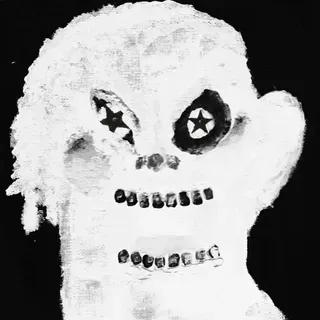
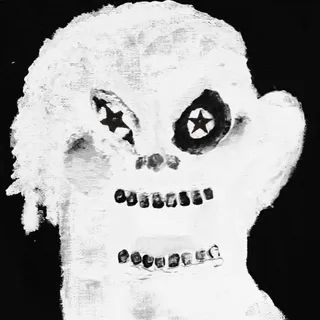
For any artist buzzing in 2025, the hardest flex is sincerity. Thirteendegrees seems to know this. Early in BLACK FRIDAYZ, on “ROOFTOPZ,” he addresses detractors who’ve written him off as a “gimmick,” a word that sticks to young rappers the way Auto-Tune once did. It’s a fair concern. He’s part of a wider wave of post-Gen Z artists mining the late 2000s and early 2010s for texture — all shutter shades, MySpace fonts, and Tumblr angst, reanimated through hyper-modern polish. Watch the black-and-white clip for “Da Problem Solva,” which channels Kanye’s “Good Life” so faithfully it feels like someone unearthed a lost Hype Williams reel.
But the gimmick talk misses the point. “Da Problem Solva,” Thirteen’s first breakout hit, retools the melodic eccentricities of 2015-era Young Thug and The-Dream’s silky precision into something buoyant and sharp-edged. Across BLACK FRIDAYZ, his Island Records debut, Thirteen threads those influences—plus a touch of Chicago house glow—into a sound that balances melody, nostalgia, and quiet ambition.
He’s positioned himself as a foil to Chicago drill, though his music feels more like a reprieve from the maximalist chaos of Playboi Carti and his imitators. Instead of turning nostalgia into costume, Thirteendegrees uses it as source code. He’s part of a small but growing movement—artists like London’s fakemink and feng—who mine the early-Drake moodboard for tone and story rather than irony. In a post-rage landscape, where everyone’s chasing distortion, their music feels refreshingly clear.
The final stretch of BLACK FRIDAYZ glows with that clarity. “Ghetto Hipster” and “Drive Save” trade chaos for warmth, their amber tones recalling Acid Rap more than anything from SoundCloud’s shadow realm. They suggest a bridge to Chicago’s alt-rap lineage—Saba, Noname—even if Thirteen’s lyrics hover on the surface, sketching label drama and self-image more than soul. Maybe that’s the point: his presence carries enough charge. His lineage traces as much to Sicko Mobb’s “party music” as it does to Thug’s surrealism.
The record peaks when Thirteen leans into what he calls its “luxurious, above and beyond” sound. “Fake Killa,” “Champain,” and “Chiraq Child” (featuring rising firebrand lil2posh) feel like victory laps: glossy, euphoric, and heavy with late-night synths that could’ve soundtracked a Datpiff upload in 2012. The homage is clear but never cosplay—more a study in how the past can be repurposed for motion, not just memory.
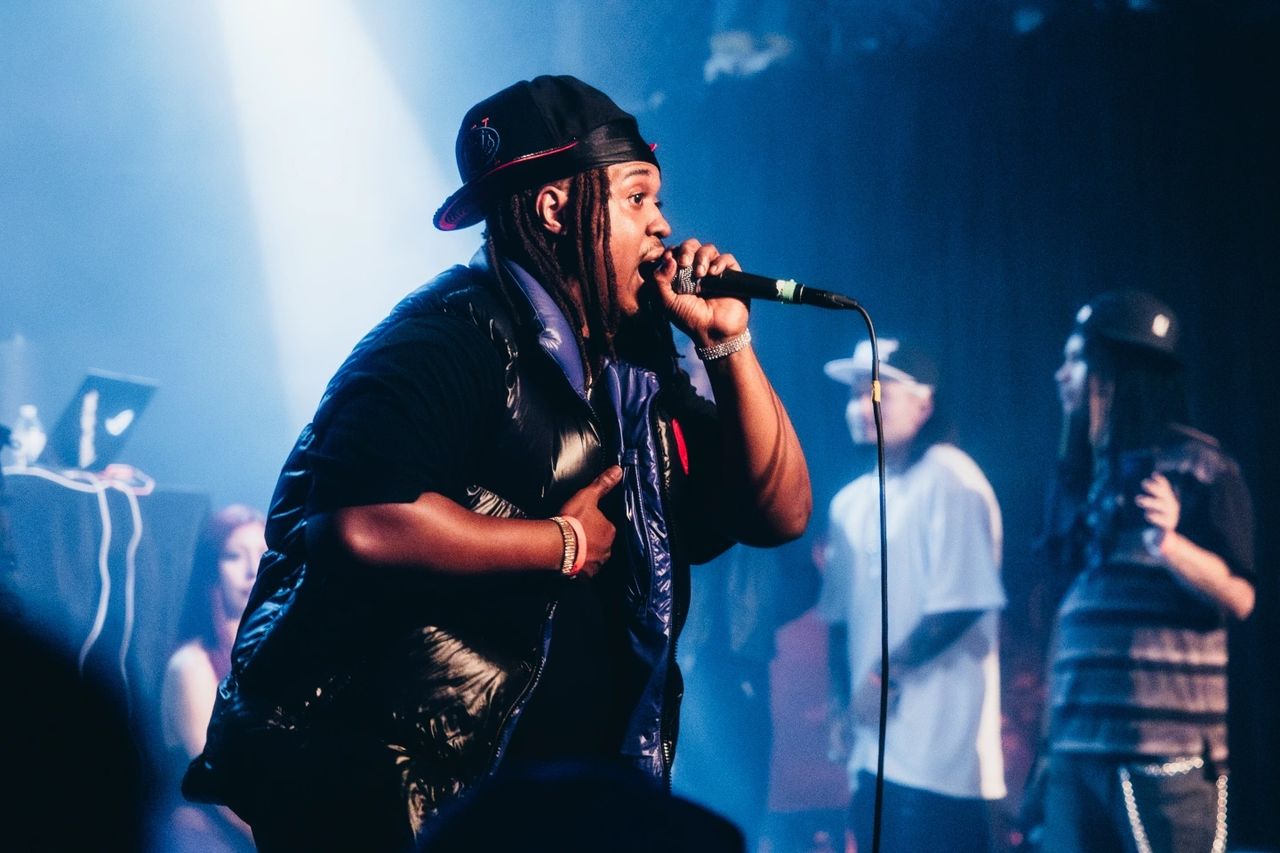
BNYX, the producer du jour, meets him halfway on “Palace,” where shimmering synth constellations melt into Lex Luger risers and cheap drum fills—a love letter to the mixtape era through a 4K filter. I do miss the rough vocal takes of Clique City, Vol. 2, which gave his delivery a certain hunger, but BLACK FRIDAYZ’ studio polish expands his palette. “Blacc Friday,” the record’s moshpit moment, swings between Travis Scott Auto-croons and Yeat-style chants. It’s not his sharpest cut, but it earns its adrenaline.
For all its surface gleam, BLACK FRIDAYZ doesn’t chase virality. Thirteendegrees resists the TikTok-era impulse toward fragments and hooks that exist only for clips. His aim is albumcraft—a holistic world, not a highlight reel. The record coasts more than it combusts, but that steadiness feels intentional, even refreshing.
If this is a transition record, it’s a confident one. BLACK FRIDAYZ establishes Thirteendegrees as an artist less interested in feeding algorithms than in building architecture. He’s still finding his shape, but the foundation’s strong. The “gimmick” days are over—if they ever existed at all.
About the Author