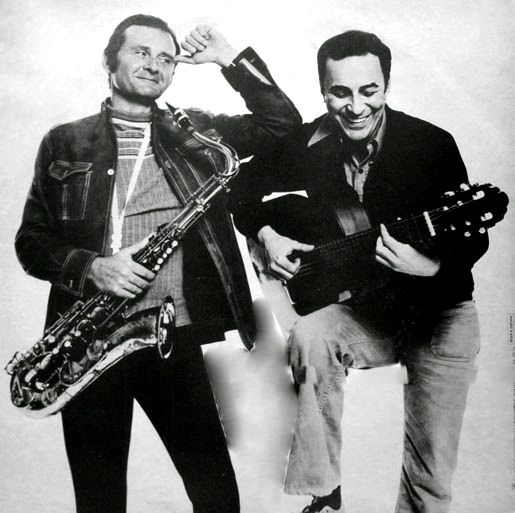
In 1976, at a concert that joined two hemispheres of jazz history, Stan Getz paused before calling his collaborator to the stage. The American saxophone player—cool, self-assured, forever in orbit around his own legend—seemed suddenly undone. “The most individual singer of our time,” he announced, his voice carrying both reverence and disbelief. “A true originator.” He spoke of warmth without vibrato, of rhythmic purity and intimacy, of guitar work so understated it bordered on hypnosis. It was the language of someone who’d spent years trying to decode a mystery and had only grown more awed by its inscrutability.
Miles Davis once distilled it better, in his trademark scalpel-cut of a line: “Gilberto could sound seductive reading aloud from the Wall Street Journal.”
For more than a decade, Getz had watched João Gilberto up close—onstage, in the studio, in those wordless moments where genius resists explanation. What baffled him was what baffled everyone: how so much intensity could live inside a whisper. Gilberto’s bossa nova—born in mid-century Brazil but quietly detonating across continents—was the softest revolution imaginable. In an era defined by volume, distortion, and spectacle, he championed a new kind of rebellion: one that existed in restraint, in breath, in rhythm as architecture. It’s easy to forget that the sound now dismissed as “elevator music” once split open the musical world.
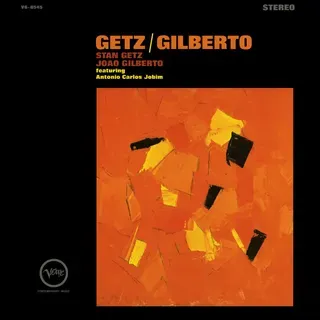
When Getz/Gilberto arrived in 1964, it sounded less like a cultural export and more like a revelation. For Americans, it was the moment bossa nova “arrived.” For Brazilians, it was déjà vu—an echo of a movement already in full bloom. The disconnect was staggering, like discovering years later that the biggest hit in China is “Old Town Road.” By the time Getz and Gilberto met in the studio, the revolution had already happened in Rio: the spark lit by Gilberto’s 1959 debut, Chega de Saudade, which redefined samba and—depending on who you ask—Brazilian modernity itself.
“The kids could see themselves in that music,” Ruy Castro wrote in his essential history, Bossa Nova. Gilberto, with his unassuming presence and monk-like focus, became both enigma and savior. He replaced the national obsession with the accordion with six strings and silence. Caetano Veloso would later confess, “I owe João Gilberto everything I am today. Even if I weren’t a musician, I would say that I owe him everything.”
That level of reverence was far from guaranteed. In the mid-’50s, Gilberto was broke, isolated, and losing grip on reality. Expelled from the vocal group Os Garotos, he wandered Rio’s streets like a ghost—dirty hair, rumpled suit, muttering to himself outside the National Library. It was what Castro called a “solitary descent into his own personal hell.” After drifting through southern Brazil, he turned up unannounced at his sister’s home in Diamantina—a city not yet wired for fame or reinvention. She had just given birth, and though she recognized the tremors in her brother’s mind, she let him in.
Over the next eight months, Gilberto vanished into a bathroom. Literally. The small tiled room, with its echo and hard surfaces, became his private conservatory. Hours passed as he tested the acoustics of solitude—his guitar against the tile, his voice against the air. Gone were strums and flourishes; instead came a rolling pulse of bass notes against syncopated chords, the quiet tug-of-war that would define bossa nova’s DNA. He said the rhythm came from watching Afro-Brazilian women balance laundry baskets on their heads, hips swaying in countertime—a memory of grace turned into meter. In that bathroom, he learned that by singing softly—almost nasally, without vibrato—he could move time itself. He could push and pull against his guitar, create tension without volume. Somewhere between lullaby and lament, the new sound found form.
At first, no one else could hear it. His sister did—at dawn, when he sang to her infant daughter, voice barely audible over the baby’s breath. His father didn’t. “That’s not music,” he sneered. “It’s nyah nyah nyah-nyah nyah.” A stint in a sanitarium followed, where doctors declared him perfectly sane—an artist, not a patient.
When Gilberto returned to Rio, he brought the bathroom with him—the reverb, the silence, the precision. He sought out Antônio Carlos Jobim, a pianist already flirting with harmonic sophistication rare in Brazilian pop. Jobim listened, recognized the genius, and stripped everything else away. Their first collaboration, “Chega de Saudade,” was an act of quiet detonation. The song’s literal meaning—“No more blues”—belied its soft melancholy. Gilberto’s sighing vocals tangled with Jobim’s chords like light filtered through glass. It was samba reborn as introspection, existentialism sung through the nose. Beneath the prettiness lived an unresolvable sadness, harmonies that refused to land cleanly. Gilberto’s sound shrugged: such is life.
The sessions that birthed Chega de Saudade were famously torturous. Gilberto demanded a separate mic for voice and guitar, twenty-eight takes to perfect a single vowel. Jobim, who arranged the record, nearly lost his mind trying to accommodate. But the results shifted Brazil’s cultural axis. And soon, via Quincy Jones and Charlie Byrd’s State Department tours, the sound crept northward—sublime contagion. Jazz players fell hard. “Desafinado” (“Slightly Out of Tune”) became a lingua franca, covered by everyone from Herbie Mann to Chubby Checker. Byrd played it for Getz, who instantly recognized a lifeline.
By then, Getz was both legend and liability. In the 1950s, he’d been anointed jazz’s golden boy—white, handsome, melodic to a fault. The New York Times called him “the poll winners’ poll winner,” a coronation that said as much about race as it did about tone. But by 1960, John Coltrane had stolen the crown, and Getz’s addictions—heroin, barbiturates, arrogance—had hollowed him out. “Did they put one in?” a former bandmate joked after his heart surgery. He needed reinvention, and bossa nova, with its soft contours and cosmopolitan sheen, offered salvation.
“The songs of João Gilberto and Antônio Carlos Jobim arrived here when anemia and confusion were becoming noticeable in our music,” Getz said later, with a hint of opportunism disguised as admiration. Jazz was fracturing—Coleman’s free forms, Coltrane’s spiritual fire—and bossa nova’s discipline, its minimalism, felt like an anchor. Getz recorded Jazz Samba with Charlie Byrd in 1962; their version of “Desafinado” won a Grammy and sold a million copies. Soon, there were sequels—Big Band Bossa Nova, Jazz Samba Encore!—each one less inspired than the last. What Getz really needed was the source.
They met in 1962, at Carnegie Hall, during a Brazilian cultural showcase. The concert was messy, but sparks flickered. Four months later, in March 1963, Getz, Gilberto, Jobim, and a small Brazilian rhythm section entered A&R Studios in New York. João brought his wife, Astrud. What followed were two days of tense perfectionism and linguistic friction. “Tom, tell that gringo he’s a moron,” Gilberto snapped at one point. Jobim translated diplomatically: “Stan, João says he’s always dreamed of making a record with you.”
Despite the frost, something clicked. Gilberto’s softness made Getz’s tenor shimmer like liquid mercury. His saxophone provided the vibrato João refused to give. Together, they built a sound as precise as it was sensual. The record’s eight songs breathe like a single thought. The old sambas—“Doralice,” “Pra Machucar Meu Coração”—sound reborn, their sweetness tempered by adult melancholy. “O Grande Amor” is Getz at his most restrained, Gilberto at his most ghostly. And “Desafinado,” the record’s centerpiece, achieves something rare: a dissonance so delicate it feels like longing itself.
The song is technically treacherous—74 measures, 20 chords, a key that keeps slipping like sand underfoot. Gilberto’s delivery disguises its complexity; vowels fall fractionally late, consonants melt, harmonies slide by half-steps. To the untrained ear, it’s effortless. To those who listen closely, it’s vertigo.
And then—her. Astrud Gilberto, the unassuming wife whose voice would upend everything. The story is apocryphal but true enough: She was the only one in the room who spoke English, so she sang “The Girl From Ipanema”’s English verses as a scratch vocal. No training, no plan, just a lilt both fragile and indifferent. In that instant, she became the girl everyone imagined: cool, unreachable, perfectly aloof. João opens the track with a wet, percussive murmur of nonsense syllables—“jeem doon doon bleem gung gong”—but history forgets him. The world only heard her.
The irony is thick enough to choke on. The song was written by Jobim and Vinícius de Moraes about a real girl, Heloísa Pinheiro, a teenager they watched walk past a café in Ipanema. Yet Astrud became its eternal embodiment. Her “he” instead of “me,” her flat vowels, her untrained phrasing—these accidents of second-language delivery became its magic. She sang as though she didn’t care to be understood. Listeners projected everything onto her: desire, nostalgia, escape. It’s the oldest trick in pop—make mystery sound effortless—and she nailed it on take one.
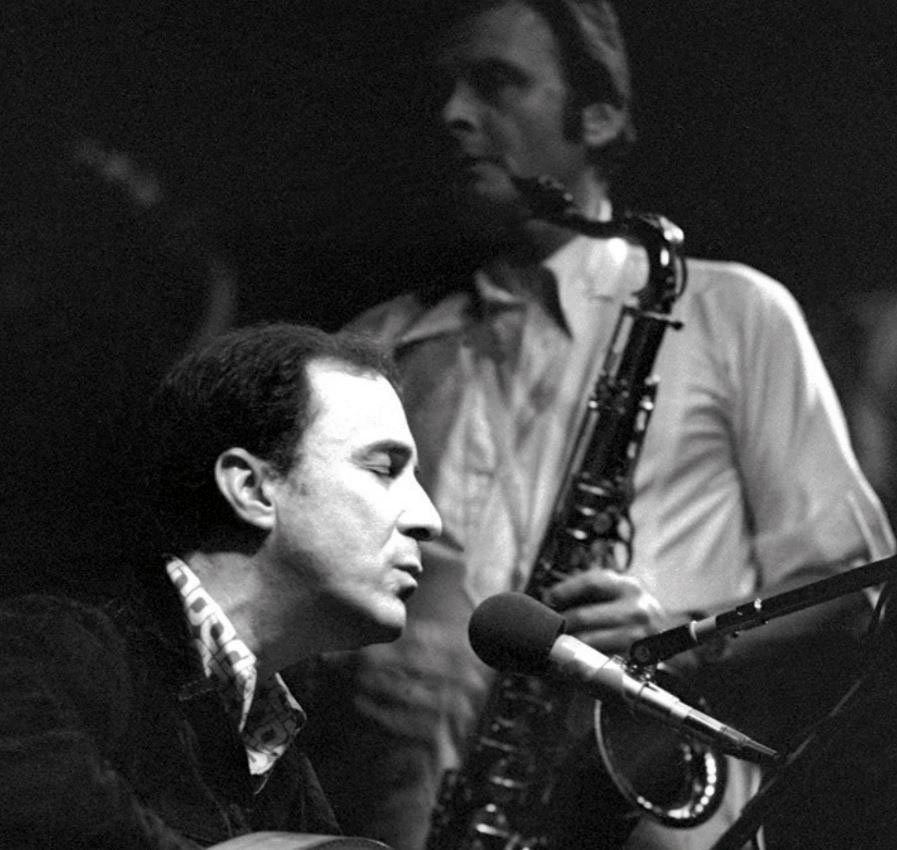
Verve sat on the album for nearly a year, convinced the bossa nova wave had already crested. By the time they released it in 1964, the Beatles had invaded, Brazil had plunged into a military coup, and João and Astrud’s marriage had dissolved. Still, the record caught fire. “The Girl From Ipanema” went to No. 5 on the Billboard charts; the album reached No. 2, just behind A Hard Day’s Night. Getz/Gilberto stayed there for 96 weeks, proof that the quietest music in the room can sometimes be the loudest.
The aftermath is pure 20th-century irony. Getz pocketed a fortune and a country estate. João earned $23,000. Astrud received a session fee: $120. Her name didn’t appear on the sleeve. João’s lost its tilde. The music, meanwhile, outlived them all—absorbed, repackaged, degraded into hotel lobbies and airport lounges until its radical core seemed invisible. But listen closely, and you still hear what made Getz stammer in 1976: that impossible balance of precision and emotion, control and surrender.
Astrud’s contribution lasts under three minutes across two songs, but its impact reverberates still. Getz burned bridges, Gilberto receded into hermetic silence, Jobim became canon. She, the accidental icon, endured.
In a decade defined by noise—the electric Dylan, the screaming Beatles, the immolation of Hendrix—João Gilberto staged the most understated rebellion imaginable. He didn’t shout, he didn’t solo, he didn’t even open his mouth fully. He whispered. And the world rearranged itself around that sound.
About the Author