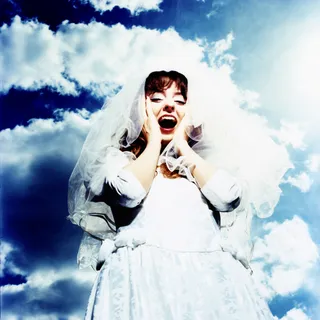
Summer Walker closes the book on her Over It trilogy with the swagger of a woman narrating her healing arc in a TikTok storytime, the kind where the nails click against the camera and every sentence ends in a knowing exhale. Put a finger down if this sounds familiar: you released a generational R&B debut at 23, fell headfirst for the producer who doubled as your creative lifeline, learned mid-pregnancy that he was a cheater and a self-professed “male chauvinist,” weaponized the heartbreak into a Grammy-nominated EP, found new love, birthed twin boys, escaped another emotional sinkhole, endured a few more messy entanglements plus the inevitable Shade Room surveillance, and, after years spent earning your place among R&B’s modern lovergirls, finally—finally—feel over it. Walker has lived all of that, and Finally Over It positions itself as the victory lap.
For perhaps the first time, the chronically anxious, press-averse Walker has stepped into a large-scale rollout with the intent to reclaim her narrative from stan accounts and comment sections. Finally Over It, a double album polishing ’90s and early-’00s R&B tropes to a high sheen, announces her desire for a clean slate—or at least an end to the cycle of public torment she now expects to accompany intimacy. In tandem with her emotional rebrand, she distances herself from the trap-soul smolder of her Atlanta origins. Teaming up with David “Dos Dias” Bishop as her central collaborator, and flanked by an army of marquee producers and writers, Walker opts for lucidity over volatility. The edges are softened; the rasp is buffed; the creative risks shrink. The cost of this legibility is steep: the barbed specificity and frantic rhythmic instincts that made Over It and Still Over It electrifying largely recede. Too often, the songs flatten into the sonic equivalent of a YouTube masterclass titled How to Make a ’90s Slow Jam in FL Studio, complete with airbrushed nostalgia and chrome-plated restraint. A parade of guests—Anderson .Paak, Bryson Tiller—drifts through like ghosts in a mood board.
The fixation on R&B ancestry doesn’t help. Walker’s generation-wide obsession with obvious samples and interpolations wears thin quickly: “Baby” lifts and later mirrors Mariah Carey’s “Always Be My Baby,” only to be undercut by a disinterested Chris Brown cameo, whose ubiquity feels as compulsory as a mafia appearance fee. “No” opens by sampling Beyoncé’s “Yes,” then rejects the submissive domesticity of Destiny’s Child’s “Cater 2 U” with performative firmness. These nods aspire to lineage but end up feeling like contractual obligations.
And yet, Walker remains magnetic when she channels the pistol-toting, drunk-dialing protagonist of her earlier work—the woman whose messiness made her mythic. By the second disc, it becomes clear that she thrives in the presence of other women. “Robbed You,” with fellow Atlantan Mariah the Scientist, is a masterclass in regret dressed as bravado, Walker flipping the phrase “I should have robbed you, I should have popped you” into a hook so sharp it nicks you on the way out. “Go Girl,” featuring Latto, is a brisk, confident strut in which Walker’s clipped self-portrait syncs beautifully with Latto’s swagger; the two effortlessly outshine Doja Cat, who arrives with the strained theatricality of someone attempting late-era Eminem cadences but landing closer to Qveen Herby. And on the Kanye-referencing “How Sway,” with Sailorr, Walker is her funniest and most alive: “You ask me if I’m flexible, I’ll do a split / I wanna get your name engraved in pink glitter right on my blick.” When she suppresses that chaotic sparkle, she dims. “Allegedly,” featuring Teddy Swims, is the opposite of sparkle—it’s a flat, genre-splicing mash that could easily soundtrack a contestant montage on The Voice.
The album’s imagery extends her thematic pivot into literal territory. In the lead-up to Finally Over It, Walker saturated her visuals with flashes of aqua—a shade unmistakably adjacent to Tiffany Blue—and its coded associations with luxury weddings. Her promotional site resembled a wedding invitation. She arrived at The Jennifer Hudson Show in a bridal gown, transforming the show’s walk-on segment into a pseudo-processional. And for the album cover, photographer Richie Talboy staged Walker in a direct homage to Anna Nicole Smith’s infamous 1994 wedding photo, where Smith, expressionless and bouquet in hand, clutched the fragile fingers of her octogenarian billionaire husband. Whether Walker intends this as satire of matrimonial capitalism, commentary on the industry’s transactional nature, or some murkier self-mythologizing ritual remains unclear. What is clear is that she stands at a symbolic altar of her own—one built from reinvention, performance, and the persistent desire to outrun her past narratives.
If this is Walker’s happily ever after, it’s a version defined less by catharsis and more by composure: a woman determined to tidy the rooms she once invited us to see in disarray. But in scrubbing them clean, she sometimes erases the very textures that made her impossible to look away from.
About the Author