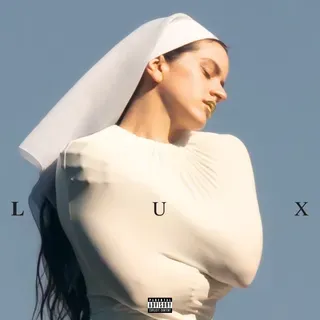
Rosalía doesn’t just release songs—she detonates them. The Spanish pop icon has long blurred the lines between avant-garde performance and global spectacle, but her forthcoming album Lux marks a new maximalist frontier. When she teased a collaboration with the London Symphony Orchestra, it felt less like a studio session and more like a coronation. “Berghain,” the record’s lead single, plays like a manifesto: a feverish collision of classical excess and club delirium, baroque pageantry meeting Berlin concrete. She sings in three languages, slips between operatic flourishes and whispered confession, and builds a sonic cathedral that combusts before your ears. It’s Rosalía at her most untouchable—wielding Vivaldi strings and Stravinsky-sized chaos like weapons of emotional mass destruction.
Yves Tumor slides into the final act as a kind of spectral usher, guiding the chaos toward Björk, whose presence hits like a tempest threatening to rip the whole structure apart. It’s impossible not to be dazzled—“Berghain” is pure sensory overload, a war between restraint and rupture. Yet beneath the spectacle lies a thornier question. The song’s namesake, Berlin’s most mythologized club, became a political flashpoint last year after French-Lebanese DJ Arabian Panther claimed he was dropped from a lineup over pro-Palestine views. Rosalía, ever the provocateur, courts this tension by invoking a symbol of both freedom and exclusion. But while Berghain flirts with controversy, it doesn’t quite wrestle it to the ground. The grandeur overwhelms the critique, leaving us wondering whether Rosalía is challenging the system—or simply out-orchestrating it.
About the Author