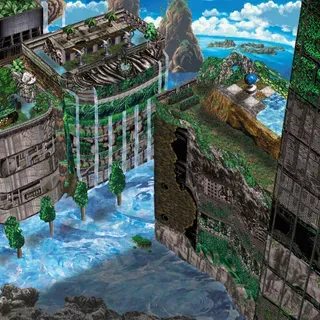

You might think you know what to expect from a Pulse Emitter record called Tide Pools: serene ambient sketches, soft synth waves lapping at the edges of perception. But Daryl Groetsch isn’t interested in repeating himself. After wringing the last traces of that crystalline calm from 2022’s Dusk and the string of lush synth albums he’s released under his own name, he’s moved into choppier, stranger waters. Tide Pools isn’t about the smooth shimmer of the surface—it’s about the alien creatures glinting below it, flexing their translucent spines in the dim light.
Groetsch still builds from his beloved bank of vintage synthesizers, but his approach here is sharper and more agitated. Instead of the bubbling arpeggios and drifting harmonics that once recalled Tangerine Dream’s Phaedra, he layers short-attack, long-release choir tones that breathe hot and close. The effect is tense and tactile, like sound pressed against the skin. The album opens with “Energy Flying,” an immediate jolt—Logic’s “South African Voice Effects” preset (familiar from Kendrick Lamar’s “Mr. Morale”) is shredded through loops of backmasked static and spasmodic sequencing. It’s one of Groetsch’s most chaotic pieces, evoking a panic that feels almost cybernetic.
As Tide Pools progresses, that nervous energy ebbs into quieter, more deliberate motion. Tracks like “Critters” flutter with insectoid percussion, while “Scattered Clouds” glows with clean, Barker-like pulses that recall the emotional minimalism of Berlin’s new techno vanguard. The shift feels earned—an exhalation after a storm.
Groetsch remains something of an outlier on the Hausu Mountain roster. A Portland-based veteran who began releasing IDM-inspired experiments in the early 2000s, he has always favored melody and atmosphere over chaos. Yet here, he seems newly aligned with the label’s maximalist tendencies. Tide Pools is both his most progressive and his most digitized album, alive with MIDI precision and crystalline processing. A quote from Rush’s “Natural Science” appears on the back cover, a sly nod to the record’s proggy DNA. Where Dusk felt handmade and analogue—like the charming tactility of old monster-movie effects—Tide Pools channels the uncanny glow of early computer graphics, that mix of nostalgia and unease that’s defined experimental electronic music since vaporwave’s birth.
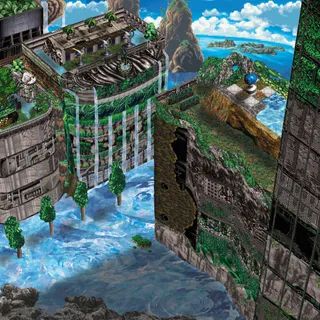
Tracks such as “Jellyfish and Friends” could pass for the theme of a lost educational CD-ROM from the late ’90s, all aqueous pads and pixelated wonder. “Bug on Desk” and “Tide Pool 1,” meanwhile, pulse with start-up tones reminiscent of Brian Eno’s Windows 95 chime—music that feels both domestic and cosmic, quaint and infinite.
There’s a reason water and the early internet feel spiritually connected: both shimmer with surface beauty while concealing immense, unknowable depths. Groetsch dives straight into that metaphor, exploring the blurred boundary between the organic and the digital, the serene and the unsettling. At 45 minutes and 15 tracks, Tide Pools occasionally succumbs to the density of its own design—its claustrophobic, hyper-detailed sound can induce the same overstimulation as staring at a screen too long. But when it works, that very tension becomes its point.
At its best, Tide Pools liquefies the barrier between listener and sound. You don’t just hear Groetsch’s modular circuitry—you float inside it, weightless and entranced, staring down into a glowing, pixelated sea.
About the Author