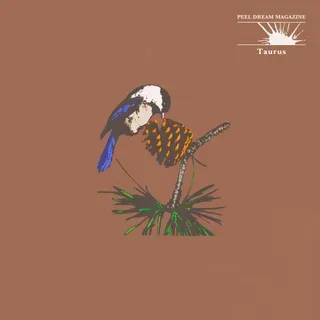
The indie rock outtakes EP is a dying art. Once a rite of passage for prolific cult auteurs, it used to serve as a glimpse into the sketchbooks of obsessive world-builders. For bands like Guided by Voices or Belle and Sebastian, those scrappy compilations of half-finished songs and rough demos were essential — little side doors into their ever-expanding mythologies. In today’s streaming era, though, that practice has largely faded, replaced by algorithmic “deluxe editions” and filler bonus tracks tacked onto the end of bloated albums. Joseph Stevens, the mind behind Peel Dream Magazine, still understands the importance of a thoughtfully curated outtakes collection. Like his heroes, he treats the castoffs not as leftovers but as crucial connective tissue — fragments that reveal how the world of his lounge-pop project is built.
Each Peel Dream album has been followed by a companion release that illuminates the corners of Stevens’ songwriting. Taurus, which arrives after 2024’s Rose Main Reading Room, continues the tradition. Where that record leaned into minimalism and restraint, Taurus feels looser, more playful — a tour through the outer edges of Stevens’ sonic palette. You can hear him stretching out, testing what happens when the pristine structure of Rose Main Reading Room is allowed to breathe a little, to smudge around the edges.
Peel Dream Magazine has always been transparent about its influences, but Stevens’ best songs manage to recombine those touchstones into something personal and strangely timeless. His music often feels like a thrift store treasure — Stereolab’s kosmische pop here, Brian Wilson’s ornate melancholy there, stitched together with the intimacy of a bedroom demo. Tracks like “Hiding Out” from 2022’s Pad linked the pastoral banjo lines of the Beach Boys’ “Cabinessence” to the bittersweet intricacy of Sufjan Stevens, all filtered through a quieter, more inward lens. Peel Dream’s music rarely gestures toward grandeur; it keeps its gaze small, finding transcendence in street-level details instead of sweeping drone shots.

The songs on Taurus are simpler, more direct — less collage, more snapshot. Opener “Venus in Nadir” wears its Yo La Tengo influence proudly, a whispery lo-fi lullaby built on a perfectly circular melody. The title track drifts deeper into Stevens’ Sufjan phase, rich with choral harmonies and melancholy brass, while “Seek and Destroy” slips back into the motorik hum of vintage Stereolab. Yet the simplicity feels deliberate — a reminder that Stevens doesn’t need layers of concept to make his melodies land. These are some of Peel Dream Magazine’s most immediate songs to date.
“Venus in Nadir,” in particular, shows how Stevens’ attention to detail elevates even the most familiar forms. Its verse-jam-verse structure feels classic, but each return to the song’s lilting synth hook brings something new — an extra harmony, a deeper bassline, a tiny shimmer that catches the light differently each time. What could have been cloyingly cute becomes hypnotic. Likewise, the unfinished demo “Take It” highlights Stevens’ knack for turning restraint into richness. With just fingerpicked guitar and electric keys, it floats like a Bacharach daydream, half instrumental, wholly gorgeous.
Listening to Taurus can feel like watching the light shift across a piece of mid-century furniture — smooth, inviting, quietly mesmerizing. These aren’t songs meant to dominate playlists; they’re small, handcrafted spaces to get lost in. Stevens’ ability to make his discarded ideas sound this complete, this self-assured, speaks to his quiet brilliance as a songwriter. In the right hands, even scraps can glow. Taurus proves that Peel Dream Magazine’s margins are just as fascinating as its center.
About the Author