In 1930, in a Berkeley laboratory, physicist Ernest Lawrence built the first cyclotron—a particle accelerator that could smash atoms and expose the building blocks of the universe. Within a decade, his machine was helping fuel the Manhattan Project, and Lawrence himself took home a Nobel Prize in Physics for his efforts.
Nearly sixty years later, a different kind of energy began to pulse through Berkeley. Four local punks were about to split something far more volatile than atoms. Operation Ivy—named after a 1952 hydrogen bomb test—achieved what no one thought possible: they fused the raw aggression of hardcore punk with the rhythmic swing of ska. Their lone LP, Energy, lives up to its name—a kinetic blast of melody, grit, and motion. If the Nobel committee had any sense, Ska-Punk would be a prize category alongside Physics and Peace, and Operation Ivy would have been onstage in Stockholm, medals glinting against their studded jackets.
On a Sunday night in May 1989, a few hundred sweaty kids crammed into 924 Gilman Street, a warehouse punk club tucked in an industrial pocket of Berkeley, just blocks from the bay. The opening act was a trio of East Bay newcomers who’d recently changed their name from Sweet Children to Green Day. But the night belonged to the headliners—Operation Ivy—celebrating the release of Energy.
Formed just two years earlier, the band came out of the gate fully formed, like a creature born running. With Jesse Michaels on vocals, Tim Armstrong on guitar (then known as “Lint,” for reasons no one quite remembers), Matt Freeman on bass, and Dave Mello on drums, Operation Ivy became the heartbeat of the Gilman scene. That night, they tore through twenty songs—their entire catalog—while the audience flooded the stage, shouting every word, fists raised. “It was magic,” recalled Lookout! Records cofounder Lawrence Livermore, in Gina Arnold’s 1997 book Kiss This. (Livermore took his punk alias from the East Bay nuclear lab named after Ernest Lawrence.) “There were millions of kids there, singing all the choruses,” he said, “and we couldn’t figure out where they’d come from. It was like a punk Woodstock.” Gilman’s capacity was technically 225, but if you’ve met more than a dozen Bay Area punks, at least fifteen will swear they were there.
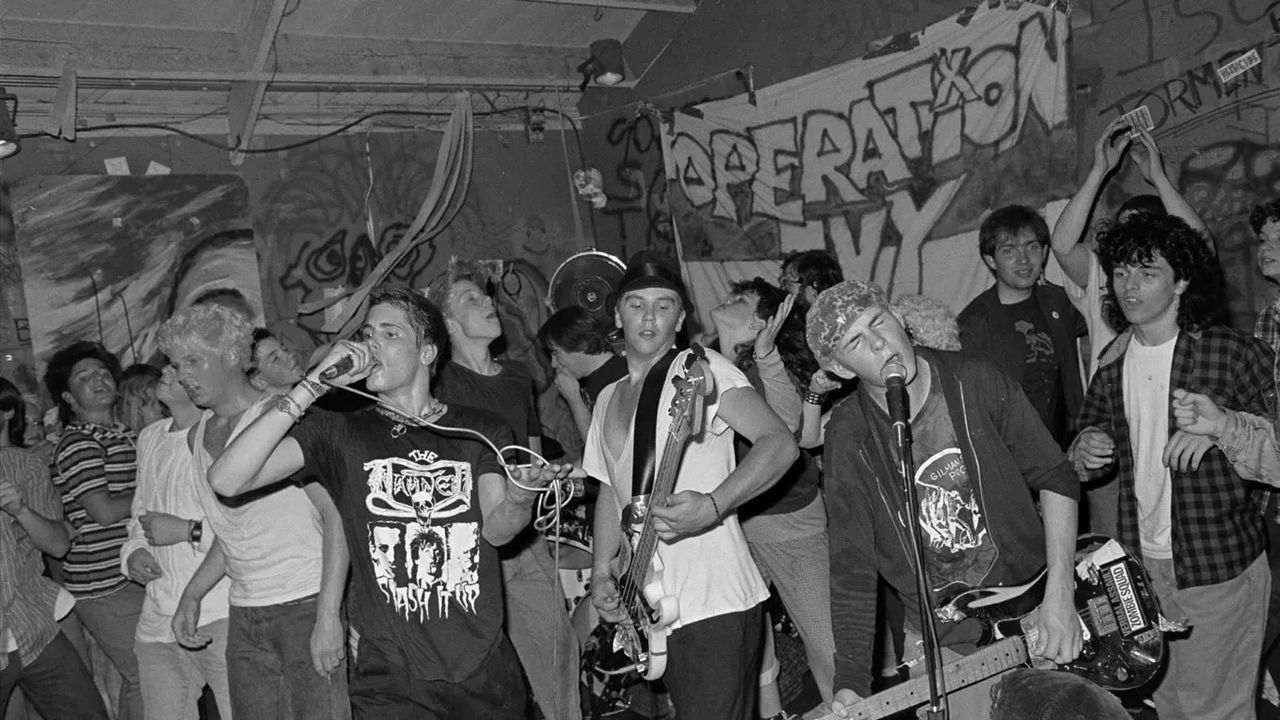
Operation Ivy closed their set with “Unity,” a call-to-arms anthem that sent the crowd into a euphoric frenzy. Michaels’ cry of “Stop this war! Unity, as one stand together!” became both benediction and farewell. It was the high-water mark of their short existence—and, famously, their final show.
Okay, not technically their last. The band played once more the following night, in their friend Eggplant’s backyard. And while “Green Day’s first show was opening for Operation Ivy’s last” looks great on paper, it isn’t exactly true; flyers prove Green Day had already performed under their new name by then. But, as the saying goes—print the legend.
Nearly three decades later, the reasons behind Operation Ivy’s breakup remain murky. Some say Michaels walked away to escape unwanted attention; others insist it was a mutual decision, that the band had simply reached its natural end. Whatever the case, their brief discography—one EP, one LP, and a few compilation tracks—feels monumental. In 2009, Michaels wrote the introduction to Gimme Something Better, an oral history of Bay Area punk, where he wryly observed: “The rock writer writing about punk generally has one aim: to arrogate intellectual ownership of something he or she knows absolutely nothing about.” (Before deciding whether I agreed, I had to look up arrogate.)
From the first needle drop, Energy lives up to its title. The opening track, “Knowledge,” blasts out in under two minutes with a chorus that rewrites Socrates for a mosh pit: “All I know is that I don’t know / All I know is that I don’t know nothing.” It’s pure teenage philosophy—simple, defiant, and self-aware. For a group barely out of high school, it’s startlingly heady stuff. Then again, Michaels is the son of Leonard Michaels, a UC Berkeley English professor and New Yorker contributor; punk runs deep, but so does language.
“Knowledge” went on to become a punk standard, covered by everyone from street punks to suburban mall kids. Green Day has played it live more than 780 times—more than “American Idiot,” and even, improbably, more than “Big Yellow Taxi.” They’ve performed it to crowds larger than every person who ever saw Operation Ivy combined.
Twelve years ago, I played bass for Ted Leo in a comedy show at SF Sketchfest. We picked two songs to represent Bay Area independence: “Knowledge,” and the Full House theme song. Only one of those quoted Socrates.
The second track on Energy, “Sound System,” swerves from punk to ska so abruptly it feels like a musical handbrake turn. The band had flirted with ska on their debut EP Hectic, but Energy sharpened it to perfection. Armstrong—whose earlier band, Basic Radio, specialized in 2 Tone grooves—became the de facto musical director, introducing the others to ska’s founding texts: The Specials, Madness, The Selecter, The English Beat. “I had never really played ska,” drummer Dave Mello later admitted. “Tim told me, ‘You’ve got to listen to these records.’”

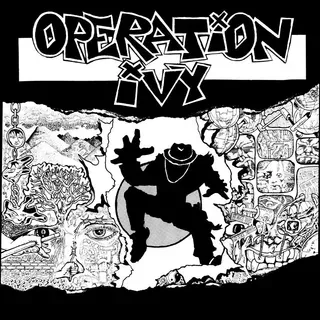
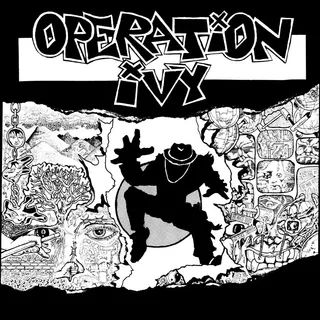
That education paid off. Energy pivots from hardcore blast to ska shuffle in seconds, sometimes mashing them together like checkerboard Vans in a blender. The transitions are dizzying: the buoyant skank of “Unity” giving way to “Vulnerability,” a grim account of a hit-and-run death. Buried in the album’s cover art—a black-and-white drawing by Michaels—is a yin-yang symbol, a nod to the balance between joy and despair that defines the record. It’s that whiplash of tone that makes Energy feel alive.
Though often hailed as the blueprint for third-wave ska, Energy also carries traces of hip-hop in Michaels’ rapid-fire phrasing and political candor. Like Public Enemy, he treats his lyrics as dispatches from the front lines of a collapsing society. “It’s 1989, stand up and take a look around,” he warns on “Freeze Up,” painting a portrait of a world teetering toward chaos. It’s aged depressingly well.
Operation Ivy played close to 180 shows in just two years, and that live muscle memory is all over the record. Mello and Freeman’s rhythm section is airtight; Armstrong and Michaels trade vocals with a mix of tenderness and defiance that still sounds fresh. Their duet on “Bad Town” (the only track with horns) captures their shared energy perfectly—half street brawl, half sing-along.
The band first tried recording Energy inside 924 Gilman itself to capture its live ferocity but quickly scrapped the plan. They decamped to a San Francisco studio with engineer Kevin Army, who later worked on Green Day’s Insomniac and countless Lookout! classics. Army’s production preserved the grit but widened the sound; the record feels like you’re standing right at the edge of the pit, ready to be swallowed.
The story of Operation Ivy is inseparable from the story of Gilman Street. Founded in 1986 by Maximum Rocknroll’s Tim Yohannon, the venue became an all-ages sanctuary for East Bay punk. It still stands today—a nonprofit, volunteer-run, and fiercely independent. The rules are painted right on the wall: NO ALCOHOL, NO DRUGS, NO VIOLENCE, NO RACISM, NO SEXISM, NO HOMOPHOBIA, NO TRANSPHOBIA. When I dropped by for a show recently, four grindcore bands were on the bill. The first, Piss Baptism, played in black executioner hoods. The audience ranged from seven-year-old punks to retirees in leather jackets. Despite the chaos, the energy was pure friendliness—a DIY utopia powered by distortion.
Unlike CBGB, Gilman will never become a chain-restaurant tribute to its own mythology. It stays vital because bands like Operation Ivy built it that way. By breaking up at their peak, the group set a standard for integrity—rejecting fame in favor of principle. Gilman’s heart still beats with that ethos, from Crimpshrine to Sweet Baby to today’s death-metal acts with names like George Crustanza. As one friend recently texted after a show: “That place has still got the juice.”
When I was a kid, Operation Ivy intimidated me. Their fans—older skaters in patched vests smoking Marlboros outside 7-Eleven—looked terrifying. Their artwork seemed menacing. But when I finally heard Energy, I was stunned by how joyful it was. Like the Grateful Dead’s skull imagery masking sunshine daydreams, Operation Ivy’s punk iconography hid something radiant and human.
By the time I hit high school, the band was long gone. Armstrong and Freeman’s next project, Rancid, turned their legacy into MTV gold. “Journey to the End of the East Bay” immortalized Operation Ivy’s demise: “It was just the four of us, yeah man, just the core of us / Too much attention unavoidably destroyed us.”
Rumors about Jesse Michaels circulated through the ’90s like urban myths. One kid swore he’d become a monk in Tibet; another claimed he was writing the Great American Novel from an island in Puget Sound. (He did, in fact, publish a neo-noir novel in 2013.) In Gimme Something Better, Michaels sets the record straight: “I went to Nicaragua. I wanted to do something really different… I just had a rough time in my twenties. I’m a lot happier now.”
In the late ’90s, he resurfaced with Common Rider, then later with Classics of Love, and in 2021 reunited with Armstrong in Doom Regulator—a fittingly named project for two men who once fused chaos into melody.
Earlier this year, I was working as a writer on Everybody’s Live with John Mulaney, Netflix’s weekly live experiment. During a dress rehearsal, we took a call from a viewer identified only as “Jesse from Los Angeles.” There was an echo on the line. Mulaney almost hung up, but gave him a chance. “I worked as a prep cook in my twenties,” Jesse said. “I was terrible, but my boss wouldn’t fire me.”
“Why not?” Mulaney asked.
“Because my boss was a fan of my band.”
“What was your band called?”
“The band was Operation Ivy.”
Mulaney froze. “Oh my God—you were in Operation Ivy? That’s fuckin’ sick.”
.jpeg/:/cr=t:0%25,l:0%25,w:100%25,h:100%25/rs=w:1280)
I stood just offstage, stunned. Jesse Michaels had somehow called into our rehearsal. He was funny, warm, and self-effacing. When Mulaney hung up, Netflix execs immediately asked if we could get him back for the live show. Mulaney smiled, shook his head, and said, “You can’t recreate that kind of moment.”
That phone call was a perfect Operation Ivy moment—fleeting, unscripted, and unrepeatable. Like the band itself, it burned bright, then disappeared.
Operation Ivy were punk’s version of nuclear fission: a sudden burst of brilliance that illuminated everything around it before vanishing in its own explosion. What remains—Energy—is proof that sometimes the shortest sparks burn the brightest. You had to have been there.
About the Author