%20Morning%20Glory.webp/:/cr=t:0%25,l:0%25,w:100%25,h:100%25/rs=w:1280)
By the time the first chord of “Rock ’n’ Roll Star” rang out across Cardiff this summer, something strange and seismic had already happened: Britpop’s most volatile dream had come true again. Liam and Noel Gallagher, two men whose public feud once made Cain and Abel look like decent collaborators, were sharing a stage for the first time in nearly two decades. The air was thick with disbelief and cheap lager, and for a moment—just a moment—the whole of Britain seemed to stop arguing with itself. You could almost hear the sound of millions of 40-somethings exhaling in relief, their Adidas tracksuits rustling in unison.
The reunion, dubbed Live ’25, was never guaranteed to work. Oasis had long since crossed into folklore: a working-class myth from the ‘90s retold endlessly on pub stools and Reddit threads. When they announced the tour, cynics and disciples alike had questions. Would the Gallaghers survive the same dressing room without turning it into a crime scene? Would they still sound alive, or merely embalmed by nostalgia? Would they play anything released after 2002? (Yes, yes, and, tragically, no.) And yet, demand hit biblical proportions—14 million fans scrambling for tickets to the UK dates, an absurd echo of the Knebworth chaos of ’96. Only this time, the internet crashed instead of trainlines.
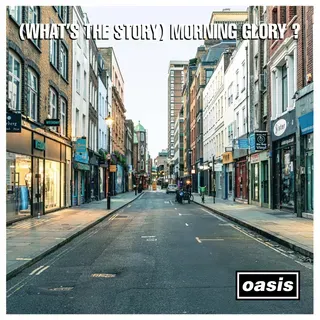
When the confetti settled and the brothers walked offstage—miraculously unscathed—something close to mass hysteria followed. Anglophiles across the globe logged on to post blurry videos of “Don’t Look Back in Anger” and declared a national holiday in spirit if not in law. Oasis had done it: returned not as a nostalgic novelty act but as cultural overlords, defying both entropy and taste. And because no Gallagher story is complete without a cash grab, they followed the tour with a 30th anniversary reissue of (What’s the Story) Morning Glory?, an album so over-reissued it’s starting to resemble a family heirloom. Peak Oasis, indeed.
These days, Oasis only compare themselves to the Beatles, and in one sense, they’ve already won. In the algorithmic 2020s, Oasis have become the de facto global rock band—a pop-cultural lingua franca that transcends class, geography, and critical fatigue. “Wonderwall” isn’t just a song anymore; it’s a meme, a karaoke inevitability, a kind of secular hymn for the perpetually sentimental. In 2025, they’re not a band but a belief system, one whose doctrine is simple: feel something, shout loudly, and don’t overthink it.
That emotional directness still radiates from Morning Glory, an album so monolithic it made sincerity feel revolutionary. The songs—“Champagne Supernova,” “Don’t Look Back in Anger,” “Some Might Say”—were designed for mass communion, built from melodies that stretch across entire postcodes. Noel Gallagher’s songwriting, however derivative, had a kind of blunt transcendence: Beatles chords reimagined as football chants, Lennon’s introspection filtered through Manchester rain. By any rational metric, Oasis were rock’s final populist act, the last band to unite Britain before it atomized into playlists.
Critics have long faulted them for stagnation, and they’re right—but that’s missing the point. Oasis were never meant to progress; they were meant to conquer. For their fans, the band’s supposed flaws—its meat-and-potatoes riffs, its swaggering self-parody—were the very proof of its purity. They weren’t chasing innovation; they were chasing immortality, and in that, they succeeded. To this day, no other act can summon 80,000 people to sing “So Sally can wait” with the fervor of a gospel revival.
Of course, the reunion tour and its attendant reissue expose all the contradictions baked into Oasis’ legacy. The remasters are indistinguishable from previous ones, and the bonus “Unplugged” tracks are curiosities at best. “Morning Glory (Unplugged)” replaces its iconic riff with piano trills and bongos, transforming the song into something faintly absurd—like a Britpop fever dream staged in a cocktail lounge. It’s unintentionally revealing: proof that even when stripped of bombast, Oasis can’t help but sound larger than life.
The brothers’ fall from grace in the 2000s was operatic. As the millennium turned, their influence began to curdle. Liam’s Beady Eye became tabloid fodder; Noel’s High Flying Birds took refuge in polite dad-rock respectability. The swagger that once galvanized a generation now seemed like cosplay for midlife crisis. And yet, the myth endured—on TikTok fancams, on festival fields, in the calf tattoos of Gen Z lads who weren’t alive for Knebworth but feel like they were. Against all logic, Oasis became bigger than when they existed.
It’s tempting to frame this as nostalgia, but Oasis’ return speaks to something deeper: a longing for a time when guitar music could still feel world-changing. The band’s universe of emotional simplicity—mateship, heartbreak, defiance—feels almost utopian in an era of irony and overload. They made rock music seem like an act of faith, not fashion, and that’s a powerful illusion to resurrect.
Listening again to Morning Glory, it’s hard not to feel both awe and exhaustion. The album remains a monument to emotional immediacy, to the idea that pop doesn’t need to be clever to matter. It’s also a time capsule of a Britain that’s long since vanished: laddish, hopeful, deeply flawed. Oasis were the last great band of the analog century, and maybe the first avatars of our digital one—forever replayed, forever memed, forever misunderstood.
Now, 30 years later, the Gallaghers stand where they’ve always been: side by side, eternally opposed. They don’t need new material; they are the material. In the end, Oasis’ reunion isn’t about redemption or reinvention. It’s about persistence—the refusal to disappear, the audacity to believe that rock’n’roll can still feel like a revolution shouted through a megaphone.
One nation, under Gallagher, indivisible, with swagger and songs for all.
About the Author