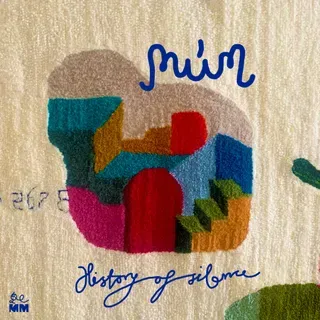

In 1998, the indie label Darla released a compilation called Drum & Bliss, a 12-inch EP that quietly named a growing undercurrent in indie pop: a mix of hazy, bedroom-produced ambience and nimble breakbeats. Jungle’s once-feral “Amen” break had by then softened into a familiar pulse, comforting enough to merge with lullaby-like melodies and toybox textures. Around the same time in Iceland, the quartet múm—Gunnar Örn Tynes, Örvar Smárason, and twin sisters Gyða and Kristín Anna Valtýsdóttir—were tinkering with that same balance. Their earliest recordings, later collected on 2012’s Early Birds, captured them chopping beats with the delicacy of a butter knife while layering on twinkling, childlike sounds that felt rescued from a preschool music set.
Had things gone differently, múm might have stayed a charming curiosity—just another act in the Drum & Bliss orbit alongside Junior Varsity KM or Technicolor. But at the turn of the millennium, when listeners hungry for the next OK Computer were swooning over Sigur Rós, Iceland became shorthand for wistful experimentation. That curiosity helped propel múm’s debut, Yesterday Was Dramatic – Today Is OK, from cult release to international discovery. It was a quietly stunning record: intricate, glitchy, and delicate, like IDM rendered through a music box. With guest strings from a young Hildur Guðnadóttir—now an Oscar winner—it remains their defining achievement. The albums that followed grew more song-oriented and, at times, oppressively cutesy. As the Valtýsdóttir sisters left and the group’s lineup expanded, múm’s spark dimmed; by 2013’s Smilewound, the band had all but disappeared.
After more than a decade away, múm return with History of Silence, an album that aims to temper their once-precious tendencies with a more grounded maturity. Founders Tynes and Smárason enlist five additional players, and the expanded ensemble lends the music a warm, lived-in intimacy. Opener “Miss You Dance” sets the tone with a minimalist blend of piano plinks, hammerlike metallic tones, shimmering strings, and flickers of digital processing. The song doesn’t linger in the mind, but its production feels airy and assured, evoking a quieter, Icelandic cousin to Sufjan Stevens’ hushed orchestral pop.
Throughout History of Silence, the arrangements are the true draw. Acoustic textures dominate: tactile piano keys, faintly glitchy percussion, and hushed woodwinds all suspended in a haze of chamber-pop melancholy. The sound is meticulous but unforced, like a room where time moves slowly. Instrumental standout “A Dry Heart Needs No Winding” layers reverb-drenched guitar, bass clarinet, and a retro-futurist synth squelch that could have come from a 1960s sci-fi film. “Only Songbirds Have a Sweet Tooth” flirts with the baroque eccentricity of early Decemberists or Andrew Bird, run through a circuit-bent filter.
.jpeg/:/cr=t:0%25,l:0%25,w:100%25,h:100%25/rs=w:1280)
But for all the care in the arrangements, the melodies themselves rarely land. When they do stick, it’s often for the wrong reasons. múm’s use of voice remains as polarizing as ever—intentional, fragile, and almost painfully twee. On “I Like to Shake,” a trembling, childlike vocal enters with such self-conscious naivety that it nearly derails the song. Titles like “Mild at Heart” and “A Dry Heart Needs No Winding” signal the band’s enduring fascination with innocence, but too much of it tips into preciousness. Half the album teeters between endearing and grating, a reminder that múm’s soft-focus charm has always come with an aftertaste of sugar overload.
For all its refinement and maturity, History of Silence can’t quite outrun the tension that’s always defined múm: the space between wonder and whimsy, delicacy and affectation. There’s beauty here, certainly—but it’s the kind that still blushes too easily.
About the Author