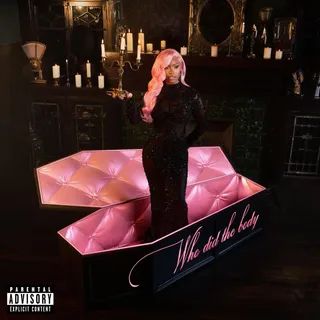
The Houston rapper’s new mixtape swings between gallows humor and gospel catharsis, building a Southern rap world that’s as funny, furious, and mortal as life itself.
In another timeline, Monaleo might’ve been walking into a courtroom with a hot-pink briefcase and a legal pad, ready to defend a girl accused of running over her ex—allegedly. That was the plan, at least, according to her mother, who imagined her daughter as a future criminal defense attorney. “She thought I just had a way with my words,” Monaleo told Vulture in 2022. She wasn’t wrong. The Houston rapper has turned that verbal dexterity into something far messier and more electric: an outlet for rage, humor, grief, and love, all fused into the same voice that can sound like a snarl or a sermon depending on the bar.
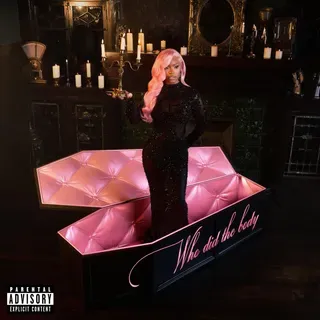
Her latest mixtape, Who Did the Body, is a study in that duality. The title reads like a homicide report, but Monaleo uses it as a way to examine her own brush with mortality—and the collective one of her community. The opener, “Life After Death,” sets the tone with a ghostly theremin whine and a YouTube-type drum loop, where she imagines squaring up with her enemies in the afterlife. “Dignified” goes darker, spinning a grim hypothetical about her own demise: “Fox News saying I was just a troubled star,” she raps, flipping media sensationalism into a prophecy. “That should show you how you die might become just who you are.” The line hits hard even as the chorus—complete with melodramatic guitars—tips into PSA territory. When Monaleo reaches for sincerity through melody, she sometimes overreaches; her singing voice is gorgeous, but her instincts as a rapper are what really bring her stories to life.
That tension—between intent and execution, humor and heaviness—runs throughout Who Did the Body. The mixtape’s best moments arrive when she raps like she’s chasing herself around the beat, balancing brash Houston swagger with a forensic eye for detail. “Spare Change” unfolds like a miniature Southern Gothic, Monaleo narrating her guilt and realization after internalizing a cop’s dismissive story about a dead homeless man. Years later, working at a funeral home, she meets his daughter again—dead too, branded with her pimp’s name. “Shake, shake, don’t be stingy, spare some change,” she chants, her cadence resembling a cheerleader’s callout. It’s the kind of scene that sounds almost absurd until it isn’t, the absurdity giving way to moral vertigo.
Across the tape, she keeps flipping archetypes into something personal. “Open the Gates” is a resurrection anthem disguised as a prison break, her delivery bursting with love for the women she lost. “We on Dat,” featuring Houston royalty Bun B, Paul Wall, and Lil Keke, feels like a block party for the ancestors, rattling trunks with the same Merion Krazy production that powered her breakout hit “Beating Down Yo Block.” On “Putting Ya Dine,” she translates local slang for enlightenment into a Southern rap mantra, somewhere between Soulja Boy’s candy-colored trap-pop and 2000s Atlanta bounce. She’s reminding listeners—and maybe herself—to stay tuned in to the South if they want to understand the roots of everything else.

Her sharpest humor often carries a political undertone. “Sexy Soulaan” is a pro-Black rallying cry delivered with unbothered glee, politely disinviting outsiders from the cookout and asserting that joy itself can be sacred ground. Monaleo laces the song with intracommunal codes—nods to Hoodoo, sly in-jokes, and vernacular so specific it resists translation. Elsewhere, her jokes wobble under their own weight. Lines like “We linkin’, Abraham” or “Y’all got to livestream the service like I’m Kai” gesture toward virality but feel more meme than metaphor. The balance between absurd and inspired is delicate, and she doesn’t always land it.
Even so, there’s something thrilling in her willingness to go for it—every bad pun, every scream, every sermon. “Freak Show,” her delightfully cursed collaboration with Lizzo, sounds like a haunted house inside a strip club, complete with xylophone clanks and whispered filth about grillz and Fritos. “Bigger Than Big” closes the record with full gospel drama, Monaleo wailing over a choir like she’s leading a late-night revival service. It’s over-the-top, sure, but it fits: Who Did the Body is less about neat resolution than about exhausting every last breath in the name of being heard.
For Monaleo, doing too much is the point. Her humor is a shield against despair; her audacity, a dare to the universe. She’s rapping for the ones who didn’t make it home, for the ones whose obituaries became their only headlines. If her mother once thought she belonged in a courtroom, maybe this is her truest defense work—arguing, with wit and heart, on behalf of the living and the lost.
About the Author