Two decades ago, Joe Westerlund packed up his drums and followed the current south. He landed in North Carolina with DeYarmond Edison—the pre–Bon Iver collective where Justin Vernon learned to spill his heart over folk’s broken circuitry—and from that root system grew Megafaun, one of the region’s most quietly influential bands of the late 2000s. When that dissolved, Westerlund became a local constant, the kind of drummer other musicians sought out when they needed someone who could make rhythm breathe. He became the heartbeat behind acts like Mount Moriah, Jake Xerxes Fussell, and Sylvan Esso, dissolving his sense of time inside the grooves of their songs. But beneath the pulse, something stranger was stirring: an experimental composer waiting to stretch his limbs.
His first metamorphosis came in a burst of surreal color. Grandma Sparrow, Westerlund’s unhinged alter ego, felt like Syd Barrett by way of Pee-wee’s Playhouse—a warped, vaudevillian creature singing psychedelic children’s music with the anarchic glee of Frank Zappa. It was messy and exuberant, an exorcism of ideas that cleared the way for something more grounded. When that mania receded, Westerlund reemerged with 2020’s Reveries in the Rift, an album that swapped absurdist theater for introspective ritual—bell tones, polyrhythms, and meditative layers that glowed like heat rising from stone. Elegies for the Drift, released three years later, shaped that intuition into something more architectural, folding thumb piano studies inspired by his time in the Democratic Republic of the Congo into poignant tributes to departed mentors, including free-jazz titan Milford Graves, who had once taught him how to make rhythm breathe.
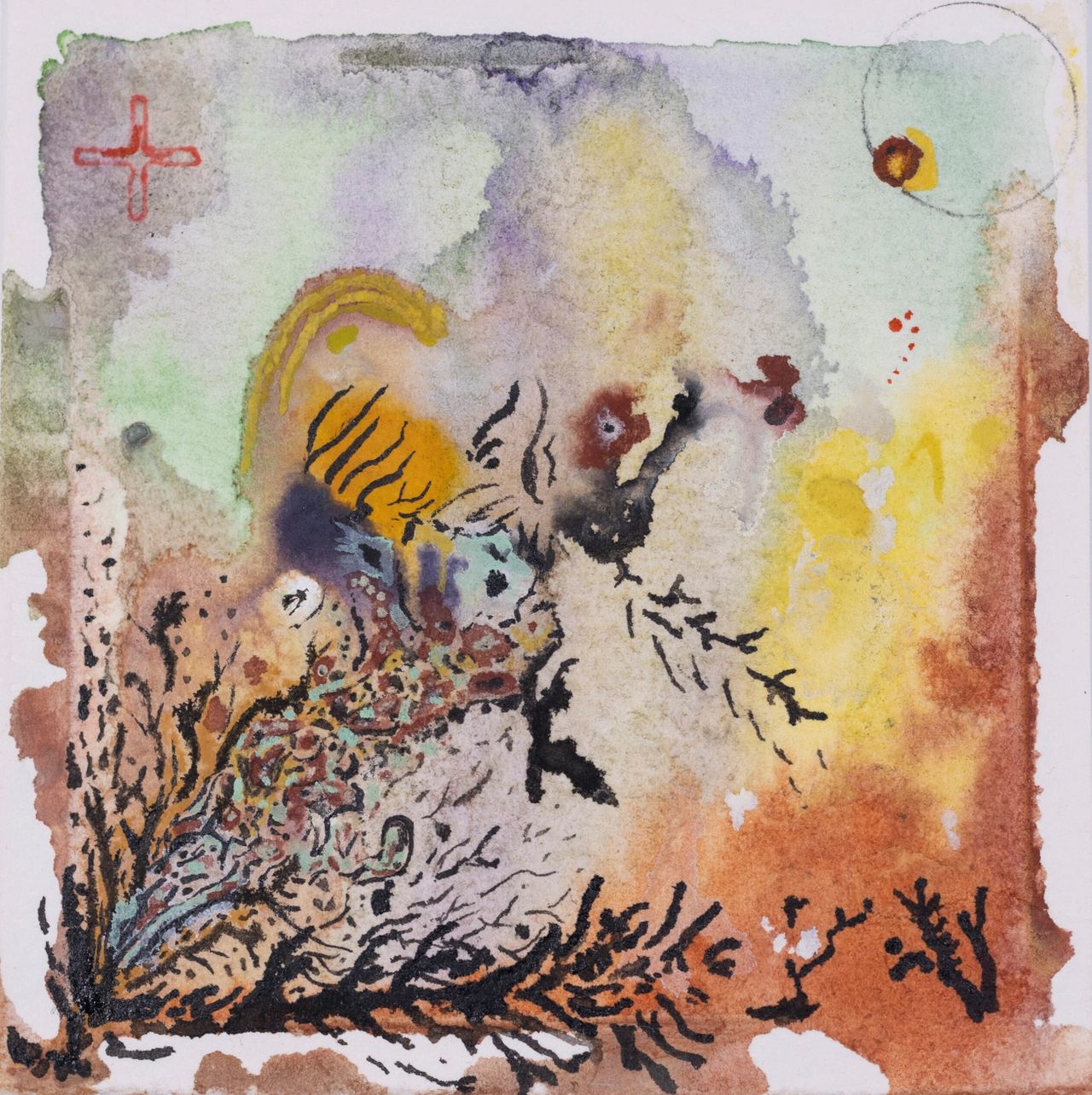
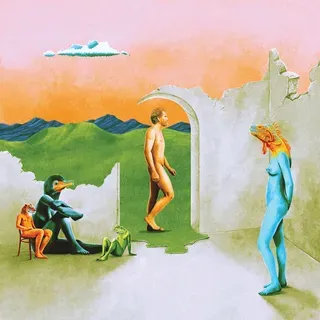
Now, Curiosities From the Shift extends that lineage—another chapter in Westerlund’s quietly radical body of work, each record distinct yet undeniably connected by the same slow, patient excavation. He’s found a space where his practice feels both methodical and loose, cerebral yet glowing with joy. The title nods to the idea of transformation, but the “shift” itself refers to something more specific: Westerlund’s recent devotion to the clave, the Afro-Cuban rhythmic code whose asymmetrical five-beat pattern drives salsa, rumba, and countless diasporic offshoots.
He’s far too humble to claim reinvention, and rightly so—the vanguard of that tradition remains with masters like Dafnis Prieto and Miguel Zenón—but what Westerlund does here is inhabit the clave as an organism. He treats its framework as both cage and compass: two bars of 4/4 divided unevenly into a pattern that feels both stable and perpetually off-balance. Within that constraint, his imagination blooms. Curiosities doesn’t flatten the clave into a gimmick; it dissolves into it, letting the rhythm dictate the logic of movement and sound.
The result is ecstatic, prismatic, and deeply tactile. The album’s surface thrums with microscopic detail—every shaker and bell refracting light across the stereo field like flecks of mirrored dust. After sketching the framework alone at Sylvan Esso’s studio, Westerlund invited an eclectic circle of collaborators to color the edges: Califone’s Tim Rutili adds grit and flicker; Sam Gendel’s saxophone slips in like smoke; Libby Rodenbough’s violin drapes the percussion in fine threads of melody. Together they animate the record’s kaleidoscopic network of hand drums, metallophones, thumb pianos, flutes, and field recordings.
To call it a “percussion album” undersells its warmth and abundance. Curiosities From the Shift has the physicality of techno and the luminosity of modern composition, but it resists the austerity of either. Its density feels transparent, each texture breathing in sync with the others, until rhythm and harmony blur into one glistening organism. Westerlund’s technique is dazzling, but what lingers is his sensitivity—the way his beats seem to move with intention rather than force, coaxing you into their motion rather than pulling you along.
Each piece feels like a small ecosystem. “Nu Male Uno” glows with the wide-eyed shimmer of early Animal Collective, a gentle sway of thumb pianos over soft, sighing pulses. “Peebles ’n’ Stones” unfurls like a Rube Goldberg contraption of rhythm—clicks, chimes, and pianos cascading into each other in precise disorder. “Can Tangle” distills his pop instincts, a tiny song encrusted in rhythmic glitter, each note refracting through a lattice of microscopic syncopations. Elsewhere, surprises bloom like hallucinations: the dubby noir drift of “Persurverance,” the cybernetic stutter of “Furahai,” the perfumed Italo shimmer of “Midpoint,” and “Elegy (for OLAibi),” a monumental closer that begins in quiet devotion and swells into transcendent churn.
What ties it all together is Westerlund’s gift for making rhythm feel alive. His beats don’t march forward—they ripple outward, linking like water molecules across space. Drums become communication rather than punctuation; percussion becomes a breathing system. It’s a way of thinking that feels almost ecological, as if each strike reverberates through an unseen web of relationships.
-f1ddbd8.webp/:/cr=t:0%25,l:0%25,w:100%25,h:100%25/rs=w:1280)
That rigor, balanced by playfulness, defines Westerlund’s current era. Curiosities From the Shift feels like the work of someone who’s found both the tools and the trust to let his instincts lead. The deeper he digs, the more color he unearths. Despite its complexity, the album radiates ease—a rare kind of joy that comes from mastery worn lightly.
For all its theoretical underpinnings, Curiosities is ultimately about feel: the tactile pleasure of vibration, the slow unraveling of groove into something luminous and strange. It’s music that makes time porous, where every sound feels like an invitation to listen closer. Westerlund may joke about Hits From the Spliff next, but he’s already achieved something greater here—a rhythmic world that sounds less like percussion and more like consciousness itself.
About the Author