On a quiet evening in Southall, 1982, the Bhamra family gathered around their dining table, papers scattered beside plates of chapati and lentils. Mohinder Kaur Bhamra, matriarch and trained Sikh devotional singer, urged her son to eat before returning to his tinkering. Nothing about that scene looked revolutionary. And yet, amid the clatter of cutlery and laughter, history was humming beneath the surface. The family kitchen had become a recording studio, the birthplace of a sound that captured what it meant to live between worlds — British and Punjabi, modern and ancestral, devotional and deeply funky.
With a Roland SH-1000 synthesizer and a CR-8000 drum machine, 22-year-old Kuljit Bhamra stitched together a patchwork of styles: siren-like synth loops, disco basslines, Punjabi rhythms, and devotional melodies that echoed through the walls of their West London home. His 11-year-old brother Ambi sat nearby, coaxing rhythms from the drum machine, while their mother improvised lyrics in Punjabi — songs of love, distance, and devotion, sung with the full-bodied resonance of temple halls. Those sessions crystallized into Punjabi Disco, the first British Asian electronic dance record — a joyous, incandescent fusion of bhangra, disco, funk, and psychedelia, where the family’s hybrid identity took sonic form.
That such a radical statement could emerge from a suburban kitchen feels almost poetic. In early ’80s Britain, there was no ready-made dancefloor for South Asian youth to inhabit. Racism, policing, and cultural conservatism kept them out of London’s nightclubs, and the bhangra-bass daytimers that would later define British Asian nightlife were still years away. Music existed mostly in temples and wedding halls — sacred or ceremonial, but rarely free. Mohinder, who had arrived in the UK in 1961 and become the first woman to sing publicly at her local gurdwara, was already quietly breaking barriers. At family weddings, she and her sons cleared tables to make room for dancing, insisting that women join. In those moments, they weren’t just performing — they were reshaping the boundaries of community joy. Punjabi Disco emerged from that spirit of defiance: a desire to dance in a world that told them not to.
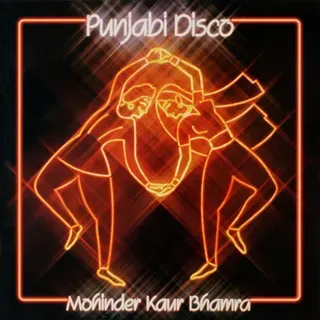
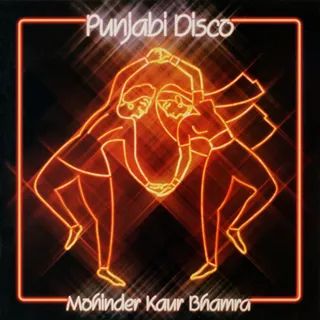
Recorded in a few frenzied days at Savage Process bassist Rik Kenton’s studio, Punjabi Disco was a family affair. Mohinder handled vocals; Kuljit and Ambi built the electronic backbone; a high-school friend, Trevor Michael Georges, held down the bass; and brother Satpaul designed the neon-lit cover. “Everything just clicked,” Kuljit later recalled. “We thought people would love it.” Instead, the label sabotaged the release — copying their concept, pressing a few hundred copies, distributing it so poorly that Kuljit hand-delivered boxes to local shops. The album slipped into obscurity, its grooves passed down only as rumor among crate-diggers and nostalgic elders. Mohinder continued singing at community events; Kuljit went on to define the sound of UK bhangra. But the family’s moment of collective alchemy remained unheard.
Now, four decades later, Punjabi Disco is being resurrected. Los Angeles label Naya Beat has remastered the nine original tracks, adding an unreleased tenth and six contemporary remixes. Heard today, the record feels startlingly fresh — its imperfections only deepening its charm. On “Disco Wich Aa,” samba rhythms and laser toms collide with folk melodies sung in ecstatic bursts. “Nainan Da Pyar De Gaya” pairs snake-charmer synth lines with Mohinder’s honeyed vocals, her lyrics about love at first sight cutting through the machinery like sunlight through fog. “Pyar Mainu Kar” veers toward proto–drum and bass, layering tabla phrasing over bubbling basslines. Elsewhere, “Par Toon Ki Janay” and “Mainu Apne Pyaar Wich” drift into cosmic funk — all elastic grooves, dueling synths, and liquid bass. You can hear the family’s curiosity at every turn: a willingness to bend genres, to make something that didn’t yet exist.
.webp/:/cr=t:0%25,l:0%25,w:100%25,h:100%25/rs=w:1280 "Photo: Mohinder Kaur Bhamra")
It’s not a perfect record. Some moments, like “Aye Deewane,” feel overstuffed, Kuljit’s arrangements straining against the limitations of early synths. But those rough edges only amplify its humanity. This was homemade futurism — dance music built on longing and invention, recorded by people still defining where they belonged. Naya Beat’s remixes add contemporary polish — Baalti’s UK-club rework of “Disco Wich Aa” and Mystic Jungle’s reggae-inflected take on “Mainu Apne Pyaar Wich” are standouts — but the originals still pulse with the raw energy of discovery.
What Punjabi Disco reminds us, more than anything, is that dance music isn’t just about technology or tempo. It’s about collapsing distance — between people, generations, continents. “Come to the disco,” Mohinder sings on the opener, her voice both command and invitation. Forty years later, it still feels like a promise.
About the Author