
.webp/:/cr=t:0%25,l:0%25,w:100%25,h:100%25/rs=w:1280)
Jenn Wasner dismantles her savior complex on an album of quiet reckonings, building peace from uncertainty.
Recently, a friend texted the group chat to say she was sick of opening her phone and seeing faces—people performing certainty, dispensing life advice to the algorithm. Uncertainty has become rare, almost radical: the willingness to say I don’t know, to unpick your own narrative instead of turning it into a brand.
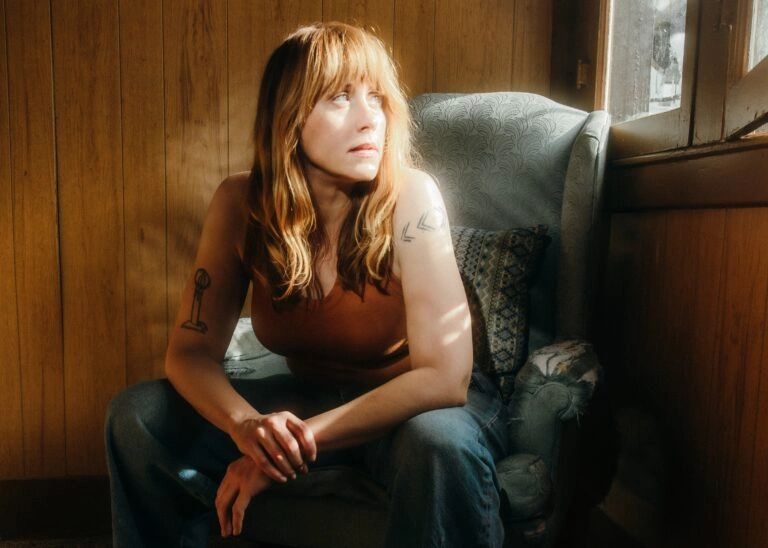
Jenn Wasner’s new Flock of Dimes record, The Life You Save, offers that very humility as a form of devotion. The Baltimore-born musician—best known as half of Wye Oak and a touring member of Bon Iver—turns inward to examine her role as the “fixer” in a family grappling with addiction and mental health. She’d been the one with answers, the savior ready to heal. But this time, she questions the ego embedded in that instinct: the cost of always being needed. “Now I’m trying to tell you how to be/Afraid that what you do to you/You’ll do to me,” she sings on “Theo,” her voice warm and aching, a hymn to the perils of caretaking.
Wasner’s earlier work often sought catharsis through intensity—guitars that corrode as they bloom, songs that burst open like cosmic fireworks. On her third Flock of Dimes album, she trades that drama for something more transparent and tactile: folktronic textures, brushed acoustics, and harmonies that shimmer like late-afternoon light. It’s less about release than revelation, inviting listeners to sit with discomfort rather than resolve it. “Afraid” and “Keep Me in the Dark” unfold like soft-spoken sermons, their melodies steady as breath. Wasner’s voice—gentle yet commanding—creates a sanctuary where doubt feels not just tolerated but cherished.
Her songwriting here balances grace and gravity. “Instead of Calling” radiates moonlit calm even as it trembles with guilt over stepping back from her old rescue missions. “Not Yet Free” lingers in the ache of waiting, suggesting that stillness itself can be a kind of healing. On “Close to Home,” she admits, “I can go on but I’m not proud of it,” a line so simple and devastating it could only come from someone who’s stopped pretending.
Even the album’s arrangements mirror this loosening. “Pride” begins with brittle guitar tension that slowly melts into pedal steel; “The Enemy” allows its squalling solo to joyfully desecrate its meditative calm. Wasner’s restraint doesn’t mute her—it magnifies her empathy. She doesn’t sermonize; she surrenders.
The record closes with two stripped-down songs that distill her journey. “Long After Midnight” follows a tidy, almost formal structure, a portrait of a helper still trying to keep it together. Then comes “I Think I’m God,” recorded live and raw, where Wasner repeats the title like an exorcism, her voice cracking as if purging control itself. By the end, she’s left bare but unbroken—a woman no longer trying to save everyone, finally letting herself be.
The Life You Save is the sound of relinquishing tension, of learning that peace doesn’t come from certainty but from surrender.
About the Author