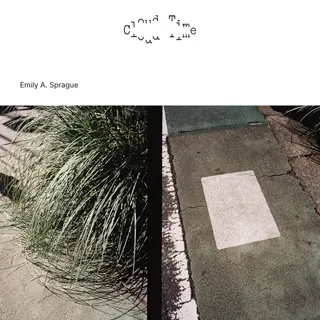
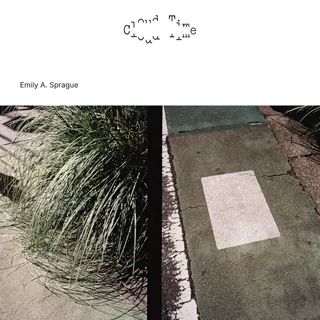
In the middle of the 2010s, when Emily A. Sprague was quietly becoming an indie-folk whisper network mainstay through Florist, a strange phenomenon was taking place online. The YouTube algorithm—half oracle, half trickster—had begun steering ambient-curious listeners toward a forgotten archive of 1980s Japanese environmental music. Out of nowhere, videos of Brian Eno were leading to Hiroshi Yoshimura’s Wet Land and Midori Takada’s Through the Looking Glass, the lush, air-conditioned calm of Japan’s economic bubble era. Nobody ever figured out why the algorithm did it, but its cultural impact was undeniable: a quiet global reawakening to kankyō ongaku, music built not for attention but for atmosphere.
Sprague, born in 1994, was perfectly positioned for that rediscovery. Her work has always carried the impressionistic patience of ambient pioneers—the way a melody can shimmer at the edges of perception without demanding center stage. She’s long expressed admiration for Japanese aesthetics, even including a Kiki Kudo poem in the Japanese edition of Water Memory / Mount Vision. But with her new album Cloud Time, drawn from live performances during her first visit to Japan, Sprague moves past quiet homage into something more participatory. These recordings, she’s said, were imagined as “something that existed only there, with anyone who was also there,” a kind of real-time collaboration between performer, audience, and place.
Of course, kankyō ongaku was designed to dissolve into its surroundings—to fill convenience stores, model homes, and train stations with a sense of balance and serenity. Sprague’s settings were far less utilitarian: small venues, curious strangers, the hum of travel exhaustion. On Cloud Time, those rooms are stripped away, leaving only the pulse of Sprague’s polyphonic synth and its extended delay, looping phrases back to her like postcards from moments already gone. She’s essentially jamming with her own echoes. The absence of crowd noise or reverb gives the impression of total interiority, as if the microphone were lodged inside the instrument’s circuitry, listening from within.
Across Cloud Time’s brief, evaporative tracks, the illusion of stillness masks constant movement. “Osaka” begins with a simple pitch bend that slowly unravels into microtonal drift, the melody bending until it’s more weather pattern than song. “Tokyo 1” starts as a whispering shimmer before mutating into something darker, its low-end growl conjuring more Stephen O’Malley than Muji. Sprague doesn’t so much play through these pieces as orbit them—her improvisations folding in on themselves, expanding, then dissolving into quiet again.
-b5e9a42.jpeg/:/cr=t:0%25,l:0%25,w:100%25,h:100%25/rs=w:1280 "Emily A. Sprague")
The result is a paradox: deeply solitary music born from the act of communal performance. If kankyō ongaku once sought to humanize architecture, Sprague’s version humanizes the loneliness of travel—the airport hotel melancholy, the private glow of a screen after midnight. Listening to Cloud Time, you can almost see her at the end of a show, packing up cables in the dim light, the audience gone, the room returned to silence. Whatever revelation might have flickered between performer and crowd has long since dissipated, leaving only the gentle hum of circuitry and the faint reminder that even our most ambient connections are temporary.
About the Author