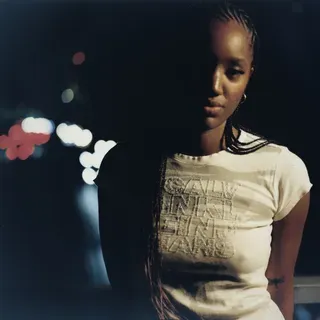
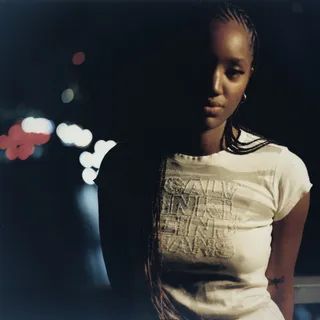
Time is a trickster when you’re grieving. It crawls and sprints all at once, daring you to heal while dragging you further from what you’ve lost. For South London’s dexter in the newsagent, the R&B singer born Charmaine Ayoku, Time Flies unfolds in that emotional crossfire—a debut mixtape written in the wake of her father’s death, where mourning becomes both mirror and muse. These songs ache with absence, but they also reach toward light, tracing the fragile hope that something beautiful might still grow from the wreckage.
From the opening track “T-shirt,” dexter’s grief feels intimate and unflinching. Her voice—soft, sure, and impossibly steady—floats over a mist of synths as she confesses, “I’ll never get the chance to see your face, feel your embrace.” The track closes with a murmured refrain of “time flies by,” a collective sigh that turns private pain into communal prayer. The mixtape sits in that tension: between remembering and moving on, between fear and faith. On “Eighteen,” she revisits her younger self, realizing how little certainty survives adulthood. “Tell me where the time has gone,” she sings, channeling Brandy’s elegance and JoJo’s late-2000s ache. “Care” strips things bare—just her and a trembling acoustic guitar—as she admits, “If I hurt myself, will anybody care?”
There’s something uniquely feminine about dexter’s reflections on time and worth. Like SZA on “20 Something” or Jessica Pratt on “Life Is,” she treats aging not as decay but as a reckoning: with identity, potential, and the cultural expiration dates placed on women. When she mentions gray hairs or lost years, it’s not vanity—it’s an attempt to locate herself in a body and world still shifting under the weight of loss.
But Time Flies isn’t just about mourning. At its heart is a quiet resilience, one that finds joy and tenderness in love’s return. On “Special,” dexter fuses early-2000s R&B warmth with PinkPantheress’ gauzy softness and a touch of folk intimacy. It’s love rendered with morning-light clarity—comforting yet questioning, devotional yet self-aware. “You’re mine in the morning, I need you like coffee,” she sings, her tone curling between affection and dependency. It’s the sound of someone learning how to give love again without losing herself.
When the production clicks—on “Special,” “Stranger to Love,” and “Eighteen”—the mixtape feels transcendent, a seamless blend of nostalgia and renewal. The less focused acoustic sketches (“With u,” “By my side”) and experimental missteps (“Did you try”) serve as reminders of dexter’s youth as an artist—curious, still finding the edges of her sound. Yet even these moments carry emotional weight; they feel like sketches of a healing mind trying to make sense of its own pace.
“Stranger to Love” lands like spring’s first thaw. “I’m not romantic, but I can change if you like,” she coos, her voice radiant with vulnerability. The lyric captures the essence of Time Flies: the quiet bravery of staying open after devastation. If grief is love persisting, then dexter’s debut is a portrait of love evolving—stretching, softening, learning how to breathe again.
Time Flies doesn’t chase catharsis; it lives in the long in-between, where heartbreak and hope share the same pulse. It’s a coming-of-age through mourning, a meditation on impermanence, and a testament to how time, cruel as it is, can still deliver grace.
About the Author