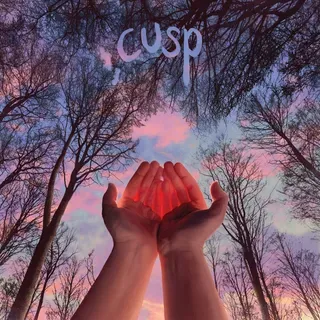

Indie rock has always been as much about posture as guitars. The ’90s gave us apathy, the 2000s irony, the 2010s sincerity. If the cycle keeps spinning, Cusp—a Chicago five-piece who sound like they were raised on K Records, midwestern winters, and free entry shows—should be back to slouching. But there’s no performance of detachment here. On What I Want Doesn’t Want Me Back, Cusp sound like a band genuinely trying: to feel better, to sound fuller, to make sense of a life that keeps moving whether you’re ready or not.
The record hums with that anxious optimism of your mid-20s, when self-assurance is a daily rehearsal and every small win feels monumental. “If you’re having fun,” sings frontperson Jen Bender near the album’s end, “it’s enough for me.” It’s a lyric that lands like a quiet shrug and a mantra all at once.
Cusp’s songs orbit around validation—the way we chase it, lose it, and learn to live without it. On “Oh Man,” Bender wonders if fulfillment can be found in possessions or people before landing on a truth simple enough to sting: “Something that shines doesn’t reflect onto yourself.” Her voice moves like a nervous heartbeat, flickering between conversational plainness and sudden ache. She writes like someone who knows how easily self-doubt can turn into self-awareness if you just sit still long enough.
That same humility threads through “Follow Along,” one of the record’s highlights. Bender catalogs insecurities like she’s flipping through an Instagram feed—friends’ apartments, perfect shoes, effortless mystery—until the song dissolves into a dreamlike waltz and she lets herself off the hook. “I am not slick,” she admits, “but I’m gonna get strong.” It’s the kind of line that could feel slight if it weren’t delivered with such earned conviction.
Cusp’s evolution since 2023’s You Can Do It All mirrors the album’s themes: they’ve grown up, but not out of reach. The move from Rochester to Chicago expanded their sound without sanding off the edges. Alongside guitarist Gaelen Bates, bassist Matt Manes, drummer Tommy Moore, and keyboardist Tessa O’Connell, Bender finds warmth in small gestures—a flicker of synths on “Oh Man,” a ghostly pedal steel on “The Upper Hand,” a tambourine shake that feels like sunlight through blinds. Their harmonies, loose but intuitive, wrap around each other like the comforting hum of old friends finishing each other’s sentences.

For all its modesty, What I Want Doesn’t Want Me Back has a clear sense of purpose: to celebrate the half-finished and half-sure. On “Extracurricular Hell,” Bender sings about the inertia that keeps you standing still; on “Give Up Your Garden,” she turns pain into fertilizer for growth. The record’s thirty minutes move like a collection of small Polaroids, each one a little imperfect, all the more beautiful for it.
“This thing is legitimate,” Bender repeats on the closing track, her voice swelling as if convincing herself. The phrase could mean anything—her band, her life, her ability to keep going—and that’s the point. Cusp aren’t redefining indie rock; they’re reclaiming its heart, trading the old poses for something far rarer: sincerity without spectacle, confidence without certainty.
If the 2020s are about anything, maybe it’s that—finding grace in the act of trying.
About the Author