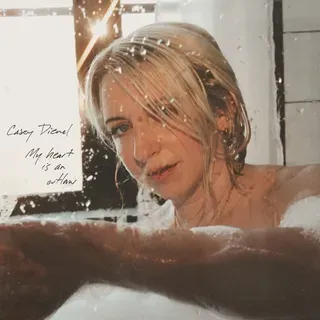
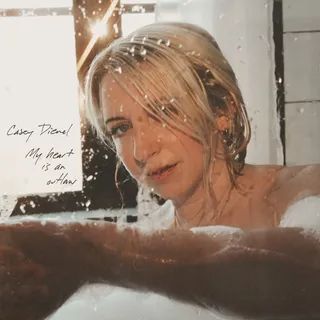
There’s something slyly radical about the way Casey Dienel opens The Heart Is an Outlaw. “I quit the idea of me,” they sing on “People Can Change,” as if shrugging off the entire premise of 21st-century selfhood. Over brushed drums and satin-smooth jazz chords, they rinse off the past and step into something looser, less knowable. In a decade where everyone is constantly “becoming,” documenting each transformation like it’s a sport, Dienel’s gesture feels more like exhale than spectacle. Reinvention, here, isn’t a marketing plan—it’s a survival instinct.
Dienel has been here before. The Massachusetts native first emerged in the late 2000s as White Hinterland, crafting eccentric baroque-pop experiments before dissolving the alias amid a headline-making lawsuit and releasing 2017’s Imitation of a Woman to Love, a pristine self-produced pop gem that deserved far more attention than it got. Eight years later, Outlaw arrives as their first record since embracing their nonbinary identity—a project that trades claustrophobia for air and abundance. Working with producer Adam Schatz (Japanese Breakfast, Neko Case), Dienel drapes their sharpest writing in warm analog textures: Carole King pianos, Phoebe Snow horns, harmonies stacked like clouds. It’s the kind of lushness that makes modern “bedroom pop” sound like a dusty demo by comparison.
“I built that shitty little garden there,” Dienel sings, “loved it so hard though nothing came up.” Their lyrics often return to the act of tending and tilling, of coaxing life out of bad soil. The metaphor doubles back on the record itself—a carefully cultivated collection that sounds both timeless and alive. The arrangements shimmer with care, even when the subjects are bruised. “3 of Cups” sways in a honeyed waltz, while “Your Girl’s Upstairs” flips heartbreak into a playful, smoky revenge fantasy. Dienel’s voice—dusky but sharp-edged—can glide through soft-rock bliss or bite through bluesy temptation with equal precision.
-15d1a17.webp/:/rs=w:1280)
But when the drums lock in, Outlaw really moves. “Seventeen” rides crisp disco rhythms straight into Fleetwood Mac’s stratosphere, and “The Butcher Is My Friend” turns yearning into propulsion, its synth line shimmering like a neon sign in the rain. The car metaphors come easy here because Dienel’s music always feels in motion—forever merging lanes between eras and emotions.
Still, this isn’t some pat “I found myself” arc. Dienel keeps circling the idea of change without ever claiming to master it: “What is love but a prayer to be changed?” they ask on “I’m So Glad You Came.” They hold transformation close but never too tightly, grounding every revelation in the sensory—cold drinks, blooming flowers, the pressure of another body. Even the nine-minute closer, “Tough Thing,” resists resolution, spiraling upward in waves of guitar and mantra: “Keep on turning, turning, turning me.”
The Heart Is an Outlaw isn’t about escaping yourself—it’s about learning to live inside the flux. In a culture addicted to reinvention, Dienel makes change feel tactile, human, and beautifully unfinished.
About the Author