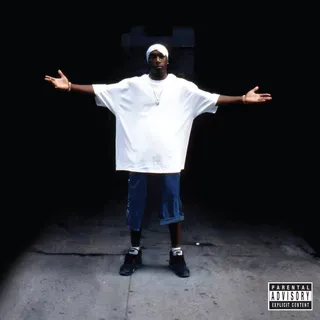
From the moment Big L opened his mouth on the mic, you could hear destiny grinning through his teeth. Beneath the venom, the hunger, and the gleeful menace was a confidence that bordered on cinematic—a Harlem kid with sunglasses on, walking calmly away from an explosion he just caused. His verses were built like puzzles: labyrinthine rhyme schemes, tongue-twisting internal rhythms, and punchlines that hit with both precision and cruelty. He wasn’t just another rapper trying to prove himself; he was a phenomenon aware of his own myth in real time. Nas once admitted that Big L “scared [him] to death” after hearing his freestyles—a rare confession from one of rap’s coldest technicians.
Born Lamont Coleman in 1974, Big L’s ascent was meteoric. By his late teens, he’d joined the Diggin’ in the Crates Crew, sparring with Fat Joe, Lord Finesse, and O.C. before landing a deal with Columbia. His 1995 debut, Lifestyles Ov Da Poor and Dangerous, felt like a manifesto: grimy, sardonic, and dazzlingly intricate, the sound of Harlem’s cracked pavement rendered in rhyme. In just 12 tracks, he established himself as both assassin and archivist—a linguist chronicling the street’s nihilistic humor with elite craftsmanship. By the late ’90s, he was trading verses with Jay-Z, building Flamboyant Entertainment, and poised to become a New York pillar alongside Nas and Big Pun. Then, on February 18, 1999, his story was cut short by a drive-by shooting near 139th and Lenox—the “Danger Zone” he mythologized. He was 24.
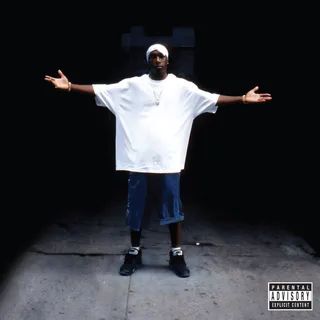
Since then, Big L’s catalog has become a cautionary monument: too small, too sacred, endlessly reassembled. His first posthumous album, The Big Picture, managed to feel eerily complete—a testament to how far along it was before his death. But the further away we move from L’s lifetime, the thinner the magic stretches. Harlem’s Finest: Return of the King, his fourth posthumous release and the newest installment in Mass Appeal’s “Legend Has It” series, is the clearest sign yet that the well’s running dry. The record wants to enshrine Big L’s legacy, but often ends up embalming it instead.
Curated by Royce Da 5’9″ and L’s estate, Harlem’s Finest tries to time-travel across every ’90s rap aesthetic at once—boom bap grit, glossy jiggy bounce, late-decade noir—but hits few of them convincingly. There’s no coherent palette, just fragments of nostalgia. “Fred Samuel Playground,” produced by Conductor Williams, nails the brooding menace that modern underground rappers like Conway the Machine inherited from L. But elsewhere, the beats feel like YouTube “Type Beats” cooked up by committee. “U Ain’t Gotta Chance” and “Doo Wop Freestyle ’99” limp along with the soul of a Spotify algorithm—hollow loops devoid of danger.
The sonic disarray might be forgivable if L’s voice still burned through the mix, but even that spark is muffled. Many verses were salvaged from radio freestyles, stripped of background noise through clumsy engineering that leaves them warped or brittle. On “Grants Tomb ’97,” he sounds like a ghost rapping through a fish tank, especially when modern guests like Nas and Joey Bada$$ enter the mix, their crisp vocals highlighting just how fragile L’s sound source has become. And yet, even submerged under all that distortion, the man’s talent still detonates. He spits with impossible precision, his timing wickedly sharp. Lines from 1995 still slice through the decades like they were written yesterday—offensive, yes, at times, but undeniably electric.
When the album works, it’s in brief flashes. “How Will I Make It” captures the melancholy swagger of Lifestyles Ov Da Poor and Dangerous; “7 Minute Freestyle,” his legendary back-and-forth with Jay-Z on Stretch & Bobbito, finally gets a clean master and remains jaw-dropping decades later. But Harlem’s Finest rarely justifies its existence. “Forever,” which Frankenstein-stitches L to Mac Miller, is a tasteless act of digital necromancy, while “All Alone” reanimates L’s voice for a would-be R&B crossover that he likely would’ve side-eyed into oblivion.
The problem isn’t reverence—it’s exhaustion. These releases are starting to feel less like tributes and more like ritual offerings to the algorithmic gods of nostalgia. Every time Big L’s archive is reopened, his myth risks dilution. His real legend wasn’t built from studio leftovers or remix packs—it was born on Harlem corners, in freestyle ciphers, on bootleg radio tapes passed like sacred scripture.
.webp/:/rs=w:1280 "BIG L")
If Harlem’s Finest proves anything, it’s that Big L’s legacy doesn’t need reviving; it needs protecting. His words already carved themselves into hip-hop’s concrete—razor-sharp, unsparing, and permanent. Everything else is just static.
About the Author