
If you’re trying to build something big, the pipe organ will do the heavy lifting for you. It’s an instrument born from architecture—an air-powered cathedral in itself. Across centuries, its thunder has lent gravity to the sacred and the surreal alike: indie-rockers seeking transcendence, conceptual artists chasing the sublime, mystics testing the limits of divine sound. The organ doesn’t just fill a room; it reshapes it, excavates it, turns space into testimony. To play one is to wrestle with a god made of pipes and breath.
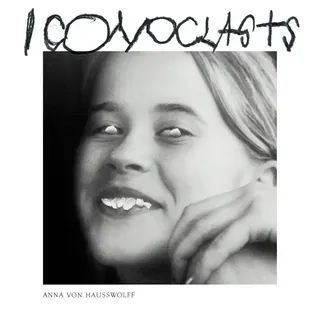
Anna von Hausswolff has long made that struggle her métier. Over the past decade, the Swedish composer and organist has turned her instrument into a vessel for the ineffable—a haunted cathedral of longing, grief, and revelation. On Iconoclasts, her first vocal-led album since Dead Magic, she doesn’t just return to the altar; she tears it down. Where All Thoughts Fly (2020) was a meditation in pure organ tone—wordless, monumental, and eerily divine—Iconoclasts reintroduces the human body. The air inside the pipes meets the air inside her lungs, and what emerges is something furious, uncontainable, alive.
The album opens in familiar territory: vaulting chords, gothic reverb, the sense that the walls themselves are breathing. But this time, von Hausswolff isn’t interested in worship. “I fought so much for you, for us, our life here,” she cries on “The Beast,” her voice shimmering against Otis Sandsjö’s fevered saxophone. “But now you need to go.” The declaration lands like an exorcism. The organ rumbles, cymbals crash like collapsing masonry, and the song becomes a ceremony for letting go—of lovers, of idols, of the fragile structures that once held her together.
If Iconoclasts is about destruction, it’s also about the awe that follows it. “The Whole Woman,” a duet with Iggy Pop, sounds like a hymn cracked open by confession. “I’ll tell you the whole truth,” she sings, and the moment feels seismic—as though she’s not just revealing herself, but reinventing what her music can contain. The record hums with that tension: the grandeur of ritual colliding with the intimacy of heartbreak. Where her earlier work treated the organ as an immovable monument, here it becomes something elastic, almost human, capable of trembling.
Von Hausswolff’s band feels newly unshackled, too. Sandsjö, a new addition, plays like a man carving light into air. His saxophone slithers through “Consensual Neglect,” burning gold and blue at the edges, and mutates into near-metal ferocity on “Stardust.” In “Facing Atlas,” his overlapping lines whip like wings across the mix, shadowing von Hausswolff’s towering vocal incantations. The group’s interplay gives Iconoclasts a body—one that heaves, sweats, and glows under pressure.
Production-wise, the record is immense but never static. Von Hausswolff knows when to zoom out and when to suffocate you with detail. “The Mouth” condenses the cathedral to a shoebox, bouncing between stereo channels like a trapped spirit; “Struggle With the Beast” feels like a thought forced through teeth, grinding and raw. There’s beauty here, but it’s the kind that bruises—deep purples and half-formed blues that bloom under the skin.
.webp/:/cr=t:0%25,l:0%25,w:100%25,h:100%25/rs=w:1280)
In moments, Iconoclasts recalls the devotional sprawl of Nick Cave’s Ghosteen or the cosmic ache of Chuquimamani-Condori’s dreamscapes, but von Hausswolff’s vision remains singular. She doesn’t use the sacred to elevate herself—she uses it to measure the scale of her own fragility. When she sings, “I’m breaking up with language, in search of something bigger than this,” it sounds less like a declaration and more like a surrender.
By the album’s end, you can almost see the ruins: the toppled statues, the smoke curling from the rafters, the artist standing alone amid the rubble, radiant and unburdened. Iconoclasts is her most human record precisely because it’s her least certain—a requiem for the myths that once gave her purpose, and a hymn for what’s left when they’re gone.
About the Author