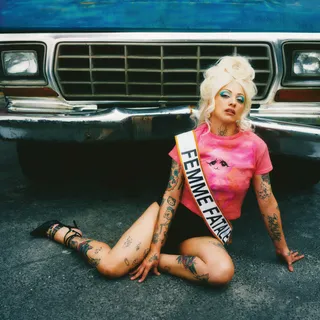
On “Femme Fatale,” Mon Laferte doesn’t just play a role — she exhumes it, examines it, and sings from inside its most volatile corners. In a pop landscape crowded with theatrical gestures but starved of real emotional risk, Laferte restores true drama: the kind that aches, spirals, and refuses dignity. Drawing from the lineage of cabaret, jazz standards, and cortavenas romanticism, she turns excess into confession and spectacle into survival.
The title track unfolds like the opening curtain of a dimly lit nightclub, steeped in old-school jazz elegance and emotional menace. Laferte’s voice is the centerpiece — elastic, feral, and impossibly expressive — moving effortlessly from fragile pleading to venomous self-awareness. When she sings, “Tal vez soy esa femme fatale,” it doesn’t land as a revelation so much as a weary acceptance, the culmination of years spent chasing identity through pain, reinvention, and desire.
What makes “Femme Fatale” so gripping is its refusal to romanticize suffering without interrogating it. Even in moments of stasis — boredom, repetition, another night spent crying — Laferte injects instability. The arrangements may flirt with nostalgia, but her delivery keeps them unhinged, stretching emotion to the breaking point. She transforms grief into motion, memory into something dangerously alive.
Throughout the song, and the larger album it introduces, Laferte blurs the boundary between performer and person. The femme fatale here is not a seductress for others, but a self-saboteur, an artist who understands that intensity is both her wound and her fuel. There’s glamour in the madness, but also terror — a recognition that living fully often means living exposed.
Ultimately, “Femme Fatale” stands as a manifesto. It celebrates emotional extremity not as indulgence, but as truth. Laferte reminds us that without a little madness, joy loses its voltage — and that sometimes the most radical act is to sing your chaos beautifully, unapologetically, into the dark.
About the Author